
Bereavement Clearance in Sallins When You Live Elsewhere: A Guide for Executors and Family Abroad
For the family member or executor who lives in another county or another country: how to look after a vacant house in Sallins, make decisions without being in the room and have the home cleared with care.
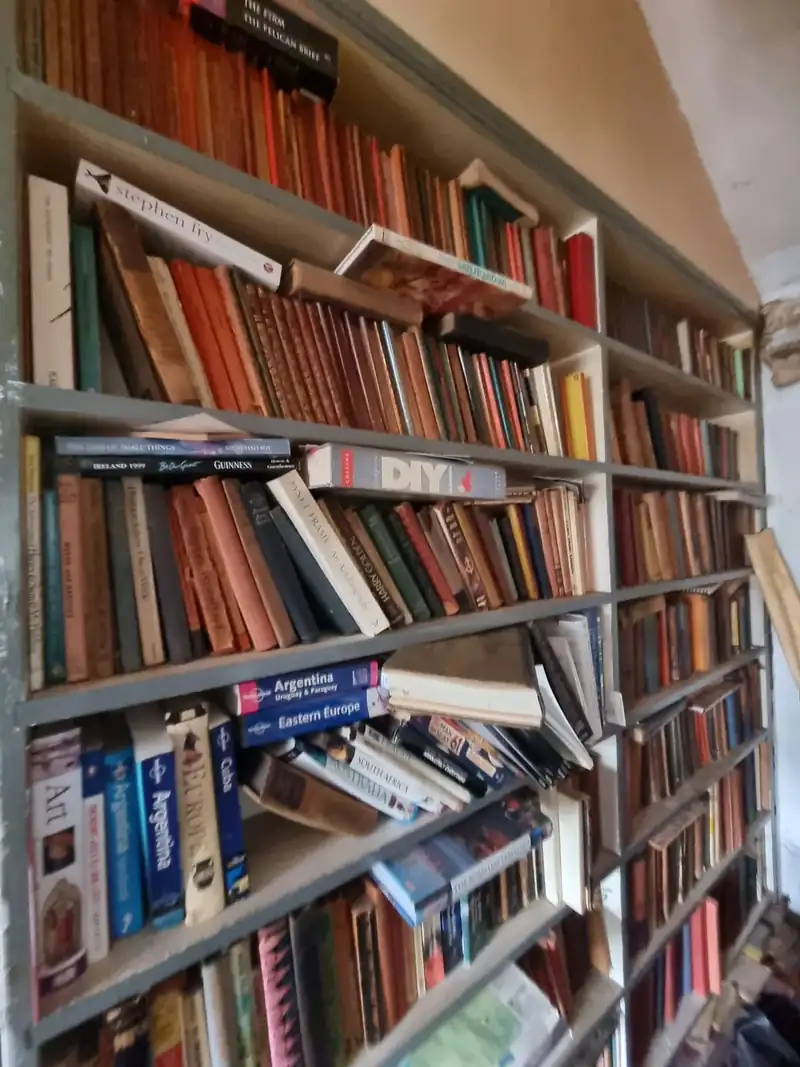
The house is in Sallins and you are not
After a death, one person in the family often ends up responsible for a house they no longer live near, and sometimes in a different country. The executor may be a son in Australia, a daughter in Canada, or a sibling in England, while the house sits in Sallins with the heating off and the post piling up. Everything that would be simple if you could drive over for a weekend becomes a series of phone calls, favours and worries.
This guide is for you. It covers how to look after an empty house from a distance, who to ask for help locally, how to make decisions about the contents when you cannot see them in person, and how a clearance works when you will never set foot in the house on the day. It is practical guidance and not legal advice; the solicitor handling the estate is the person to ask about anything involving the estate itself. PropertyClearance.ie is based in Athy, Co. Kildare, and clears homes in Sallins and across the county. The general service is on our house clearance in Sallins page, and for the more general experience of a bereavement clearance, our guide on house clearance after a death in Naas goes into the family and emotional side in more detail.
First things first: keeping an empty house safe
Before you think about the contents, make sure the house itself is looked after.
- Tell the insurer. Many home insurance policies change when a property becomes unoccupied. Tell them what has happened and ask what they require, which may include regular visits.
- Appoint a regular visitor. A neighbour, relative or friend nearby who can check the house weekly, collect post, open windows briefly and report anything unusual is worth more than any other arrangement.
- Secure valuables and documents. Remove or lock away the most important papers, jewellery and cash. If you cannot do it yourself, ask a trusted relative or the solicitor.
- Heating and water. In winter, keep the heating on low or drain the system on advice, to avoid frozen pipes. In any season, check for leaks and damp.
- Redirect or collect post. Unopened post piling up signals an empty house and may contain important correspondence.
- Cancel or transfer regular bills, after checking with the solicitor what must continue.
None of these tasks needs you to be in Ireland, but all of them need one reliable person on the spot.
Who can act for you locally
When you cannot attend, you need people you trust at the other end. Typical roles:
- The solicitor, who knows who can authorise what and can hold copies of keys and documents.
- A neighbour or relative, who can let people in, check the house and be a contact for the crew.
- The clearance company, who will work from keys, send photographs and return the keys as you direct.
- A valuer or auctioneer, if you think anything might be worth money.
Write down who is responsible for what, and share the same list with everyone. Misunderstandings in these arrangements are rarely about bad faith. They usually come from people assuming someone else was handling it.
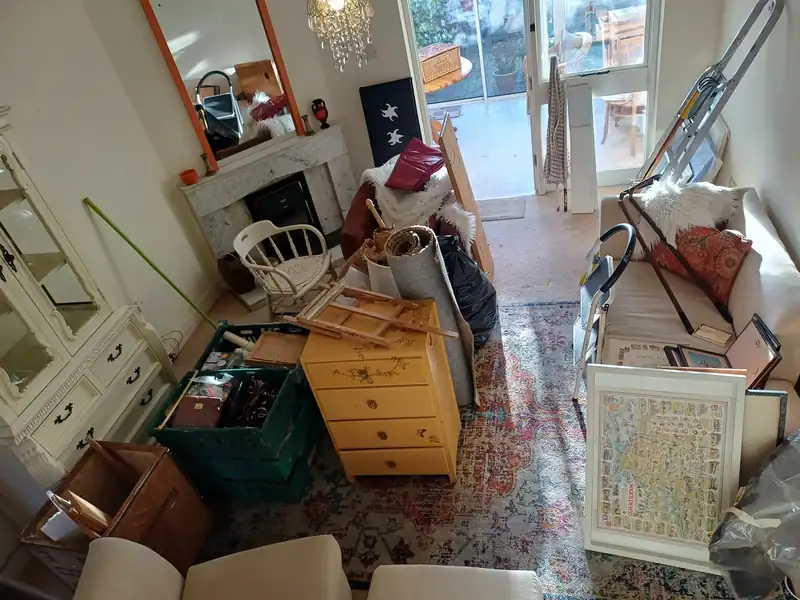
Making decisions about the contents when you cannot be there
The hardest part of managing a house from abroad is deciding what to keep without standing in the rooms. These methods help.
Ask for a video walk-through
A local relative or friend can walk through every room on video, opening wardrobes and cupboards. Watch it with other family members on a call so everyone sees the same thing at the same time. A video shows scale and detail that photographs miss.
Make a shortlist
After the video, each person writes a short list: items they would like, items they would be sad to lose, items they do not mind about. Compare lists. Often there is less conflict than expected.
Decide how things travel
If you want items sent to you abroad, ask a shipper how it works and what it costs before deciding. Small, valuable or sentimental things are often worth shipping. Furniture rarely is. A relative visiting Ireland can carry a few precious items.
Give a deadline for choosing
An open-ended deadline is the usual reason a remote clearance drags on for months. Agree a date after which anything unclaimed will be cleared.
Agree one point of contact
One person gives instructions to the solicitor and to us. This avoids conflicting messages across time zones.
Use the "list of must-finds"
Write down documents and valuables that must be found: the will, deeds, passports, bank and pension papers, insurance, medals, watches, cash. Share the list with whoever is in the house and with us.
If you can visit: making a short trip count
A short trip to Ireland is expensive and emotional, so it helps to plan it. A trip of a few days is enough if you prepare.
- Before you travelShare the video, decide who is coming, and agree the main questions with the solicitor. Book the clearance provisionally by sending us photographs, so a date can be fixed once you know your travel dates.
- Day one: the walk-throughGo through every room, attic, garage and shed. Take what you want, pack documents and valuables, and label anything staying.
- Day two: the decisionsMeet the solicitor if required, collect the items to be shipped, and confirm the clearance arrangements.
- Before you leaveHand over keys to the solicitor, a neighbour or the clearance company, with written instructions and contact details.
You do not need to be present for the clearance itself. Many people prefer to leave before it begins.
How a clearance works when you are not there
From the first message to keys returned:
- A conversation by phone or messageTell us the situation: who you are, where the house is, who can authorise the clearance and what you need. We can talk on a call or by WhatsApp, whichever suits your time zone.
- Photos or a videoSend photographs of every room, the attic, the garage and shed, or the video walk-through. We give a fixed written price covering labour, transport and disposal.
- AuthorityConfirm in writing who is authorising the clearance. If the solicitor needs to approve, we can send the quote to them.
- KeysAgree who will hand us the keys and who will receive them back. Alarm codes and gate arrangements are handled the same way.
- Your listSend the list of things to keep and the must-finds. Label anything staying in the house, or tell us which rooms are not to be touched.
- The clearanceThe crew works room by room, sets aside anything personal or valuable, and sorts the rest for reuse, recycling and licensed disposal.
- Photographs and confirmationEvery room is swept and photographed. Photographs go to you, and written confirmation can go to the solicitor on request.
- Keys returnedKeys go to whoever you nominated.
What happens to things we find
If you are not there, you want to know that what matters will be looked after. Our crew checks drawers, pockets, books and boxes as they work. Anything that looks personal or valuable, such as papers, photographs, jewellery or cash, is set aside and shown to the person you nominate, or photographed and reported to you. We can post or hand over small items to a local relative or the solicitor on your behalf if you tell us in advance.
That is not a guarantee that nothing will ever be overlooked in a house full of belongings. It is the reason the list of must-finds, and a local relative who knows where things were kept, are so useful. If you know that your mother kept her papers in the biscuit tin in the hot press, tell us.
The remainder is handled in the usual way: sound furniture and household goods are set aside for reuse or donation where possible, metal, timber and electricals are recycled, and what is left goes to licensed disposal. We do not sell items on your behalf, and we do not offer data destruction, so phones, tablets and computers should be dealt with by the family before the clearance.
What affects the price
A fixed written price comes from your photographs. These are the factors:
| Factor | Why it matters | What to send |
|---|---|---|
| Volume of contents | The biggest factor: truck space and crew time. | Photos or video of every room, attic, garage, shed and garden |
| Size of the house | More rooms and floors mean more carrying. | Bedrooms and floors |
| Access | Parking, steps and the distance from the door to the truck. | A photo of the front and the road |
| Outbuildings | Garages and sheds often hold as much as the house. | Photos of each |
| Condition | Damp or heavy clutter takes longer. | Honest, untidied photos |
| Items staying | Things that remain need protection. | A list or labels |
| Reusable items | Good furniture can be passed on. | Point out anything in good condition |
Keeping the family together across time zones
A remote estate is as much a communication problem as a practical one. Siblings in different countries, a solicitor in Ireland, a neighbour doing favours and a clearance company all need the same information. A few habits prevent most of the trouble.
- One shared note. Keep a single document or message thread that records decisions: who is doing what, the agreed date, the key-holder, the list of must-finds. Update it after every call.
- Write down agreements. A quick message saying "we agreed to clear on the date after the solicitor confirms" saves arguments later.
- Allow for the time difference. If you are many hours ahead or behind, agree when messages will be answered, and avoid last-minute decisions.
- Share the photographs. When we send photographs of each room, forward them to the whole family so everyone sees the result.
- Say it kindly. People grieve differently, and a text that reads as blunt may not be meant that way. A call is better than a long message for anything difficult.
The solicitor, rather than the family, is the right place for any dispute that cannot be settled between you. If there is a disagreement about a particular item, tell us and we will leave it where it is until it is resolved.
What an empty house risks if the clearance is delayed
There is no rush to clear a house in the first weeks, and you should not feel pushed. But an empty house is not a neutral thing to hold for months. Knowing the risks helps you choose a sensible timetable.
- Damp and heating. An unheated house can develop damp quickly, which damages furniture, carpets and papers. The longer it stays, the more the contents deteriorate.
- Insurance. Policies often restrict cover for vacant properties after a period. Check the terms with your insurer.
- Security. A house that looks empty attracts attention. A regular visitor, post collection and lights on timers help.
- Running costs. Heating, insurance, bills and rates continue while nothing is happening.
- Emotional cost. A house that is never dealt with weighs on the whole family. Many people tell us the clearance was easier than the months of putting it off.
None of this means you should hurry. It means that once the family has taken what matters, a clearance in good time is often kinder to everyone than an open-ended wait.
Questions to ask any clearance company when you cannot visit
When you cannot see the work, you need to trust the people doing it. Ask:
- Is the price fixed and written, and does it include disposal?
- Are you an authorised waste carrier, and can I see the permit number?
- Are you insured for work in a private home?
- How do you handle keys, and who will you give them back to?
- What will you do if you find something personal or valuable?
- Will you send photographs of every room when you finish?
- Can you give written confirmation to the solicitor?
- What do you not take?
Our answers: fixed written price including disposal; authorised waste carrier under Waste Collection Permit No. NWCPO-25-13287-01; fully insured; keys collected and returned as you direct; personal items set aside and reported; photographs of every room; written confirmation on request; and no asbestos, clinical waste, paint, solvents, oils, chemicals, batteries or gas cylinders.
Common mistakes when managing a clearance remotely
- Relying on one phone call. Confirm key arrangements, authority and the list of must-finds in writing.
- Assuming a neighbour has the key. Check who actually holds keys and whether they can be at the house.
- Leaving the house with no regular visitor. Problems that would take an hour to fix on day two become costly by month three.
- Forgetting the outbuildings. The attic, garage and shed need to be in the photographs.
- Letting everyone instruct the crew. Choose one point of contact.
- Clearing before the solicitor confirms. Anything that must stay for a valuation or inventory should stay.
- Leaving devices in the house. We do not offer data destruction; phones, tablets and computers should be dealt with by the family.
After the clearance: what to do with an empty house
When the house is empty, the practical questions change. If it is to be sold, the estate agent will advise on cleaning, repairs and photography; our guide on clearing before a sale covers the sequence. If it is to be let, you need repairs, a clean and a property manager; our guide for landlords may help. If the family intends to hold it for now, an empty house is easier to insure and to keep an eye on. Whichever it is, tell the insurer, take final meter readings and make sure there is still a regular visitor.
We also cover Naas, Newbridge, Clane, Prosperous, Kill and the rest of County Kildare.
Checklist for managing a bereavement clearance from a distance
A summary to keep:
- Speak to the solicitor and agree who can authorise the clearance
- Tell the insurer that the house is unoccupied
- Appoint one local person to check the house weekly
- Arrange heating, water, post and key-holder
- Get a video walk-through of every room
- Compare family shortlists and agree a deadline for choosing
- Write the list of must-find documents and valuables
- Decide what is being shipped and how
- Send photos or video of the whole house for a fixed quote
- Keep phones, tablets and computers for the family to deal with
- Return unused medicines to a pharmacy
- Label what is staying, or name the rooms not to be touched
- Arrange who hands over and who receives the keys
- Ask for photographs and written confirmation of clearance
Send photos or a video when you can, and tell us who holds the keys. We will talk it through, with no pressure.
What our customers say
Words from customers, copied as written from our Google Business Profile.
Ciprian and Brian and Willie were great. They cleared out our mom’s house after she passed away last year. Professional, organized, empathetic and resourceful. It was a job we were dreading but they did it quickly with no fuss. I’ve never made an effort to make a recommendation online but Ciprian exceeded expectations.
Ciprian was a pleasure to work with and he and his crew worked exceptionally hard to clear my dad's house. I am very pleased with the service and the results. Two thumbs up and I would recommend them to anyone.
Bereavement clearance in Sallins from a distance - common questions
Can you clear a house in Sallins if I live abroad?
Do I have to come to Ireland?
Who can authorise the clearance?
What if I need to see the house before deciding?
What happens to photographs, papers and valuables?
Can items be sent to me abroad?
What happens to furniture and household goods?
Should I get valuables looked at first?
What should I do with phones and computers?
Can you provide written confirmation for the solicitor?
Can you promise a date?
What do you not take?
How is the price set?
Are you insured and licensed?
Send photos & get a quote
The fastest way to a fixed price: a few photos of each room or area, your Sallins address or Eircode, and a rough idea of when you'd like it done. No obligation.
- Fixed written price — labour, transport and disposal included
- Dates agreed once we have seen the job; timeframes are not promised beforehand
- Fully insured crew, authorised waste carrier (Permit No. NWCPO-25-13287-01)
- Reuse and recycling first; valuables and sentimental items set aside for you
Prefer WhatsApp? Send photos to 083 090 4545.
Related guides
Bereavement house clearance guide
How to approach clearing a parent's or relative's home — probate, executors, sorting belongings and what to expect on the day.
Read the guide →Property clearance guide
End-of-tenancy, vacant, probate and pre-sale clearances explained for landlords, agents, sellers and executors.
Read the guide →House Clearance Dublin guide
What a Dublin house clearance includes, what drives the price, how to prepare, and what happens on the day.
Read the guide →Services covered in this guide
Bereavement Clearance
A discreet, unhurried service when clearing a loved one's home.
Learn more →House Clearance
Full or part house clear-outs, left broom-clean.
Learn more →Property Clearance
Any property, any size — houses, flats, offices, sheds and sites cleared.
Learn more →Furniture Removal
Sofas, beds, wardrobes and white goods collected and taken away.
Learn more →Attic Clearance
Lofts and attics emptied — you decide what stays, we take the rest.
Learn more →Looking after a Sallins home from far away?
Send photos or a video walk-through when you can, and tell us who holds the keys. We will talk it through with no pressure.