House Clearance After a Death in Naas: A Practical Guide for Families and Executors
A calm, practical guide for families and executors facing the clearance of a parent's or relative's home in Naas: what to do first, what can wait, how decisions get made between family members, and how the day itself works.
There is no deadline you have to meet this week
If you are reading this in the days after a death, the first thing worth saying is that the house does not need to be dealt with immediately. The funeral, the family and the paperwork that follows a death come first. A clearance is a later step, and most families in Naas and the surrounding Kildare towns book one weeks or months afterwards, once the immediate period has passed and they have the energy to face a house full of someone's life.
That said, a clearance tends to arrive with a reason attached. A rented house must be handed back. A sale is being agreed. A nursing-home place or a tenancy is ending. Or the family simply does not want to keep paying to heat, insure and worry about an empty property. This guide is for those moments. It covers the order in which things usually happen, what to ask the solicitor, how families decide what to keep, how the house is actually emptied, and what happens to the belongings afterwards.
It is general guidance only. It is not legal advice, and the solicitor handling the estate is the right person for anything about the estate itself. PropertyClearance.ie is based in Athy, Co. Kildare, and clears homes in Naas and across the county every working week. Our page for house clearance in Naas gives the general service details; this guide is the more personal one.
Setting the pace: what has to happen soon, and what can wait
It helps to separate three kinds of task, because families often treat everything as urgent when very little is.
Things that usually do need attention quickly
- Security. An empty house should be locked, with valuables and important papers either removed or locked away. Ask a neighbour or relative to check on it regularly.
- Insurance. Many home insurance policies change once a property is unoccupied. Tell the insurer what has happened and ask what they need.
- Perishables and heating. Clear the fridge and freezer, and in winter keep the heating on low to avoid frozen pipes and damp.
- Post and bills. Redirect post, and make sure that regular bills do not simply lapse unnoticed.
Things that can wait until the family is ready
- Sorting personal belongings and deciding who takes what.
- Booking a clearance, as long as no deadline is attached.
- Decisions about whether to sell, let or keep the house.
Things that depend on the solicitor
- Whether anything has to stay in place for valuation or inventory.
- Who is entitled to give instructions about the contents.
- When the property can be put on the market.
A useful rule is to do the first group promptly, treat the second group as the family's own timetable, and let the solicitor set the limits on the third.
Speak to the solicitor or executor before anything leaves the house
If there is a will, one or more executors are named in it, and the executor is usually the person with the authority to make decisions about the contents. If there is no will, the position is different and the solicitor will explain who can act. In both cases, the safest first step is a short call to the solicitor handling the estate, asking three questions:
- Is anything required to stay in place? Occasionally a valuer, a solicitor or another beneficiary wants to see certain items before they are moved.
- Who can authorise the clearance? A clearance company will ask who is giving instructions. If several family members are involved, agree on one point of contact before you call anyone.
- Is there a date the property must be vacant by? A sale closing date, a landlord's handback date or an insurance condition all change how soon the work needs to happen.
We can provide a written quote in advance and, on request, written confirmation once the property has been cleared, which solicitors and executors often like to have on the estate file. We also take dated photographs of every room when the work is finished.
When several people have a say
Families rarely agree about everything, and a house full of belongings can bring disagreements to the surface even in close families. A few approaches reduce the friction.
- Agree the process before the contents. Settle how decisions will be made (who goes first, whether items are taken in turn, what happens when two people want the same thing) before anyone starts choosing.
- Choose one coordinator. One person talks to the solicitor and to us, and shares updates with everyone else. That avoids us receiving conflicting instructions.
- Photograph before you divide. If relatives live abroad or elsewhere in Ireland, photographs or a video walk-through of each room let everyone see what is there and say what they would like.
- Set a deadline for choosing. An open-ended timetable is the usual reason a clearance drags on for months. Agree a date after which anything unclaimed will be cleared.
- Keep the sentimental and the valuable separate. People sometimes assume the family silver matters more than a worn cardigan. For the person who wants the cardigan, it may be the opposite. Let each person speak for what matters to them.
If a disagreement cannot be settled within the family, that is a matter for the solicitor. We will not clear anything that you have told us is in dispute, and we can leave particular rooms or items untouched until it is resolved.
Deciding what to keep, without doing it all in one weekend
Most families underestimate how much a family home holds. A house that has been lived in for decades has an attic, a garage or shed, wardrobes behind wardrobes, and drawers nobody has opened in years. Trying to sort it all in a single weekend is the usual reason clearances become exhausting. A slower, staged approach works better.
- Take what matters firstFamily members take the things they want in their own time: photographs, jewellery, a particular chair, a recipe book. Do this before you book the clearance, and leave a clear day between that and the crew arriving.
- Write down what must be foundPassports, the will, deeds, pension and bank papers, insurance documents, medals, watches, cash kept in unexpected places. Give the list to whoever is clearing the house.
- Mark what is stayingUse masking tape and a pen, or close a door and tell us that room is staying. Anything not marked is treated as being cleared.
- Leave the rest to the crewYou do not need to bag, box or carry anything. That is the part we do.
During the clearance, our crew checks drawers, pockets, coat linings, books and boxes as they go. Anything that looks personal or valuable, such as papers, photographs, jewellery or cash, is set aside and shown to you rather than removed. That is not a promise that nothing will ever be missed in a house full of belongings, which is why the list you write beforehand matters.
Room by room: where things tend to be hidden and what to do with them
Knowing where people keep things helps the family search in the right places before the clearance, and helps the crew know what to look out for.
Bedrooms
Jewellery boxes, watches, coins, envelopes of cash, and papers in bedside drawers or under the mattress. Coat and suit pockets often hold forgotten items. Check inside shoes, handbags and the pockets of winter coats.
Sitting room and dining room
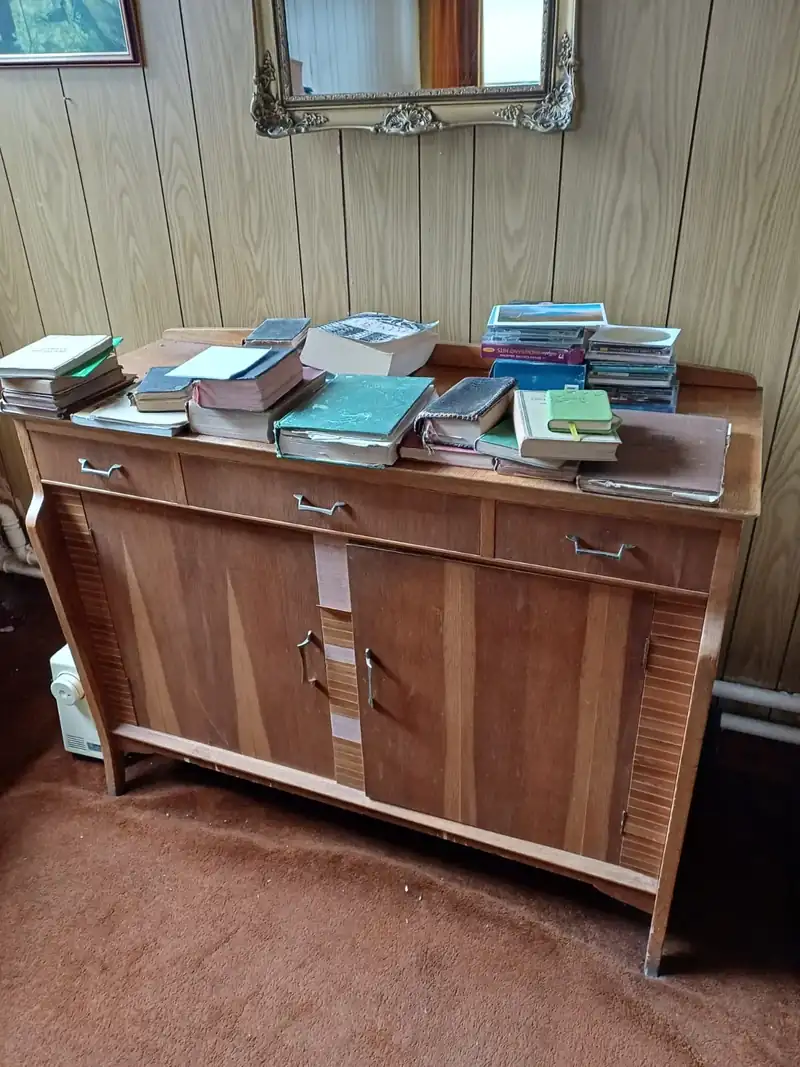
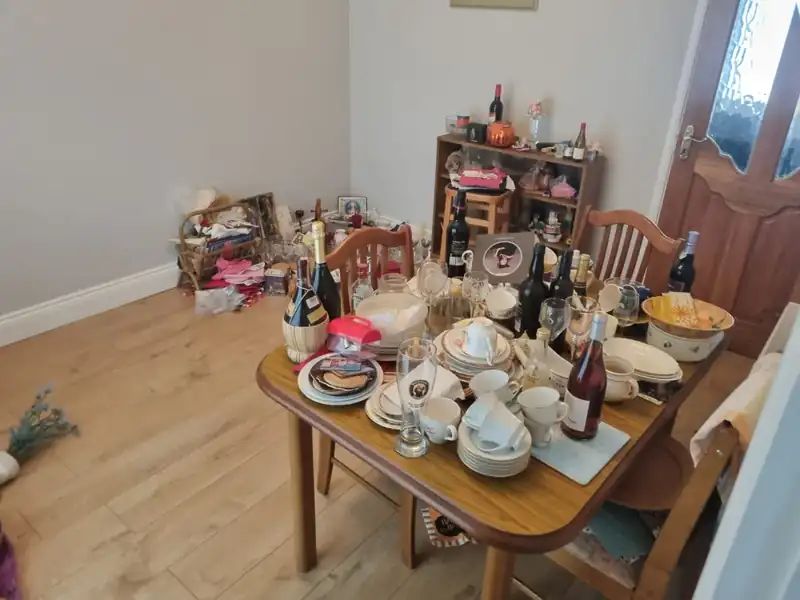
Sideboards and display cabinets hold good china, glassware, silver cutlery, ornaments and photographs. Books may contain letters, cards or money used as bookmarks. Bureau drawers are a common place for paperwork.
Kitchen
Everyday items can be reused, donated or recycled. Check biscuit tins, jars and cupboards for savings or keepsakes. Out-of-date food goes in the bin; unopened tinned and dry goods may be accepted by a food bank, but ask first.
Hot press and landing
Bedding, towels and linen can often be donated if clean. Check the back of the shelves and the top of the hot press for stored boxes.
Attic, garage and shed
These often hold the biggest volume: suitcases, Christmas decorations, tools, bicycles, garden equipment and boxes that have not been opened for years. Tell us about them early because they affect the quote. We cannot take paint, solvents, oils, chemicals, batteries or gas cylinders; take them to a civic amenity site or a hazardous waste collection, and we clear the rest.
Medicines and personal care items
Unused or out-of-date medicines should not go in the household bin. Most pharmacies will take them back, so bring them to your local one.
Computers, phones and tablets
Personal devices may contain photographs, emails and banking details. Keep them for the family to deal with rather than leaving them in a clearance, or ask the solicitor how to handle them.
What happens to the belongings afterwards
Families often find it easier to let go when they know where things are going. In our work, items follow one of four routes:
- Kept by the family. The items you have chosen, which stay or are collected beforehand.
- Reuse. Furniture and household goods in good condition are set aside for donation or reuse where possible. Tell us if you have a particular charity in mind, and we will do our best to accommodate it, subject to what they will accept.
- Recycling. Metal, timber, cardboard and electricals are sorted and sent for recycling, with electrical items handled as waste electrical equipment.
- Licensed disposal. What cannot be reused or recycled goes to licensed waste facilities. PropertyClearance.ie is operated by Krystal Klean Express Limited, an authorised waste carrier.
We do not sell items on your behalf. If you think something may have value, such as antiques, art, collectables or jewellery, it is worth getting it looked at by a valuer or auctioneer before the clearance. Ask the solicitor whether a formal valuation is needed for the estate.
Access, keys and being away
A lot of families dealing with a house in Naas live elsewhere, in Dublin, in another county or abroad. That is not a problem. If you cannot be there, we can work from keys held by a solicitor, an executor, a neighbour or a family member nearby, collect them on the morning, and return them to wherever you ask. Alarm codes and gate or side-access arrangements are handled the same way.
Tell us about anything that affects access: a long driveway, a narrow road, a house in an estate with limited parking, stairs to a converted attic. Mention if a neighbour has been helping or has a spare key so that we know who to contact. When the clearance is finished we send photographs of each room so you can see the result without travelling.
If the house is joined to others, such as a terrace or a flat in a block, let us know early so that we can be considerate about noise and parking for neighbours.
How a bereavement clearance runs, from first call to empty house
What to expect, in order:
- A short conversation firstYou tell us what the situation is. There is no script, and you can stop and start again; the people who answer have done this many times.
- Photos and a fixed quoteSend a photo of each room, the attic, the garage and the shed, or arrange a visit. We give one written price covering labour, transport and disposal.
- You choose the dateOnce we have seen the job we tell you what dates are available. If there is a closing or handback date, we plan towards it.
- Walk-through at the startIf you are there, we walk the house with you and note what is staying. If you are not, we work from your list.
- Room by roomFurniture is carried out, not dragged, floors are protected and the house is treated with respect. Good furniture and household goods are put aside for reuse where possible; the rest is sorted for recycling and licensed disposal.
- Anything found is set asidePapers, photographs, jewellery, cash or anything else that looks personal is put aside and shown to you.
- Sweep, photographs, keys backEvery room is swept and photographed. Keys are returned as agreed and written confirmation of clearance can be provided if the solicitor wants it.
A realistic timeline
Every family is different, but this is a sensible shape for a clearance that is not under pressure.
- Weeks 1 to 4: secure the house, tell the insurer, speak to the solicitor, redirect post. Nothing else is required.
- Weeks 4 to 8: family members visit, take what they want and photograph the rest. A coordinator is chosen. Documents and valuables are found and held safely.
- Weeks 8 to 10: send photos for a quote, confirm authority with the solicitor, agree a date.
- Clearance day: usually a single day for a typical three-bedroom house with attic and shed, longer for a very full or large house.
- Afterwards: meter readings, keys, a clean if needed, and then whichever of sale, letting or holding the family has chosen.
If there is a deadline, the same steps can be compressed. We do not promise timeframes before we have seen the job, and the biggest factor in speed is usually how quickly the family can agree what is staying.
Call, send a message or send photos. We will tell you honestly what the job looks like and what is worth doing first.
How the price is worked out
Every clearance is priced individually. We do not quote an hourly rate or a price per room. The main factors are:
- Volume of contents. The biggest factor, because it determines truck space and crew time.
- Size of the property and number of floors. More rooms and more stairs mean more carrying.
- Access. A long driveway, a narrow road, a limited parking space or steps to the front door all add time.
- Attic, garage, shed and garden. These are often as full as the house and should be in the photographs.
- Condition. Damp or heavily cluttered contents take longer.
- Reusable items. Good furniture that can be passed on reduces the amount for disposal.
- Dismantling. Fitted wardrobes, large beds and sheds that need taking apart add work.
You get one fixed written price after we see photographs, covering labour, transport and disposal, with nothing added on the day. If you are comparing quotes, ask each company the same questions: is it fixed or hourly, does it include disposal, are they a licensed waste carrier, are they insured, and will they set aside personal items.
After the clearance: selling, letting or holding the property
Once the house is empty, the path forward depends on the estate. If it is going on the market, the estate agent will tell you whether carpets should stay, whether a clean is needed and when to schedule photographs. If it is being let, the next steps are repairs, decoration and a clean. If the family is holding it for now, an empty house is easier to insure and secure, and easier to keep an eye on.
If the same family is also dealing with a rental or a second property, see our property clearance page. We cover towns across the county, including Newbridge, Sallins, Clane and Johnstown, and the whole of County Kildare.
Questions to ask any clearance company
Whoever you choose, a bereavement clearance deserves care. These questions are worth asking, and you should expect clear answers:
- Is the price fixed and written, and does it include disposal?
- Are you an authorised waste carrier, and can I see the permit number?
- Are you insured?
- What happens to personal items such as photographs and papers that you find?
- What happens to the furniture and household goods?
- Can you work from keys if I am not there, and will you send photographs afterwards?
- Can you provide written confirmation of clearance for the solicitor?
Our answers: fixed written price including disposal; authorised waste carrier under Waste Collection Permit No. NWCPO-25-13287-01; fully insured; personal items set aside and shown to you; reuse and recycling first; keys and photographs arranged; written confirmation on request.
A checklist for a bereavement clearance in Naas
Keep this beside the phone:
- Speak to the solicitor or executor and agree who gives instructions
- Confirm any date the house must be empty by
- Choose one family coordinator for all communication
- Photograph every room so relatives elsewhere can choose
- Take the items the family wants before the clearance day
- Write down documents and valuables that must be found
- Mark or list anything that is staying in the house
- Return unused medicines to a pharmacy and keep devices for the family
- Arrange keys, alarm codes and access, and tell us about parking
- Send photos of every room, the attic, garage and shed for a fixed quote
- Tell the insurer the property will be unoccupied
- Take final meter readings and redirect the post
- Ask for photographs and written confirmation if the solicitor needs them
What our customers say
Words from customers, copied as written from our Google Business Profile.
A brilliant service. Fast, efficient, clean and most of all friendly. Also the team were cognisant of the fact that there were bereavements in our family and showed great respect and empathy. They took the stress out of what seemed like an insurmountable job.
Thank you from the Corrigan family.
Would recommend this service to anyone staring bewildered at a house/shed/business wondering how they are going to clear this.
Ciprian and his team were so sympathetic and efficient when I contacted them to help clear out the apartment after a bereavement. The came and were very respectful in clearing completely everything, rubbish, books, clothes, kitchen, living room, bedroom in the apartment and left it spotless. The clearence took a lot of stress off me. I highly recommend them.
Lucinda
House clearance after a death in Naas - common questions
How soon after a death can a house be cleared in Naas?
Do I need to be there on the day?
Who can authorise a clearance?
What if family members disagree about the contents?
Will you set aside photographs, papers and valuables?
What happens to the furniture and household goods?
Should I get valuables looked at first?
Can you clear the attic, garage and shed as well?
Can you provide written confirmation for the solicitor?
How long does a clearance take?
What do you not take?
What should I do with medicines, phones and computers?
How is the price worked out?
Do you cover places around Naas?
Are you insured and licensed?
Send photos & get a quote
The fastest way to a fixed price: a few photos of each room or area, your Naas address or Eircode, and a rough idea of when you'd like it done. No obligation.
- Fixed written price — labour, transport and disposal included
- Dates agreed once we have seen the job; timeframes are not promised beforehand
- Fully insured crew, authorised waste carrier (Permit No. NWCPO-25-13287-01)
- Reuse and recycling first; valuables and sentimental items set aside for you
Prefer WhatsApp? Send photos to 083 090 4545.
Related guides
Bereavement house clearance guide
How to approach clearing a parent's or relative's home — probate, executors, sorting belongings and what to expect on the day.
Read the guide →Property clearance guide
End-of-tenancy, vacant, probate and pre-sale clearances explained for landlords, agents, sellers and executors.
Read the guide →House Clearance Dublin guide
What a Dublin house clearance includes, what drives the price, how to prepare, and what happens on the day.
Read the guide →Services covered in this guide
Bereavement Clearance
A discreet, unhurried service when clearing a loved one's home.
Learn more →House Clearance
Full or part house clear-outs, left broom-clean.
Learn more →Property Clearance
Any property, any size — houses, flats, offices, sheds and sites cleared.
Learn more →Furniture Removal
Sofas, beds, wardrobes and white goods collected and taken away.
Learn more →Attic Clearance
Lofts and attics emptied — you decide what stays, we take the rest.
Learn more →Need to talk about clearing a home in Naas?
There is no pressure and no charge for a quote. Send photos when you are ready, or call and talk it through first.