
House Clearance in Ringsend and Irishtown: Small Terraced Houses, No Parking, Everything by Hand
The tall houses of Dublin 4 get the attention, but the small ones are harder in their own way. This guide is for families clearing a two-up-two-down or an artisan cottage in Ringsend or Irishtown: what fits through the front door and what has to come apart, where the truck goes when there is no driveway, back yards and lanes, how much a small house lived in for a lifetime actually holds, and how the one-day job runs.
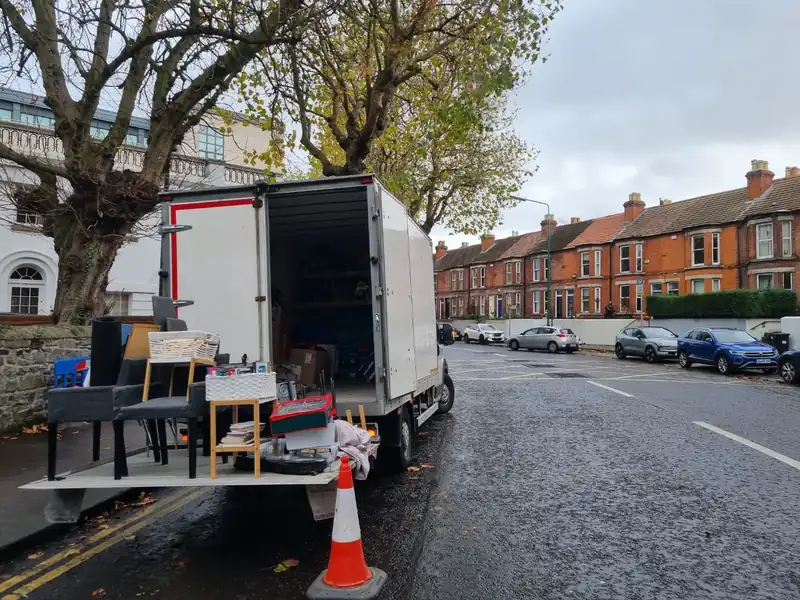
The problem is not the stairs, it is the door
Ringsend and Irishtown are old villages between the Docklands and Sandymount, and much of their housing is small and old: terraces of two-up-two-downs, single-storey artisan cottages, many with a kitchen and bathroom added at the back over the years. Front doors open onto the footpath or a yard the width of a doormat. The hall, where there is one, is narrow enough to touch both walls. The stairs are steep and turn. There is no driveway, and the street is lined with parked cars on both sides.
A clearance here is a different problem from one in a tall Donnybrook house, which our Donnybrook guide covers. Nothing large came in easily, so nothing large goes out easily. There is nowhere for the truck to stand. And because many of these houses have been lived in by one family for fifty or sixty years, they hold as much as a house twice the size, packed into less room. This guide is about those three things: what fits through the door and what comes apart, where the truck goes, and how a long life in a small house is cleared in a single day.
PropertyClearance.ie is based in Athy, Co. Kildare, and clears homes across Dublin 4; see our house clearance in Ringsend and house clearance in Irishtown pages, and the general house clearance service. If you would rather talk first, call 083 090 4545.
What a small terraced house gives the crew to work with
The layout decides the method, so it is worth describing the typical house before describing the day.
- The front door and the front room. In many cottages the door opens straight into the front room, and everything in the house passes through that room on its way out. In a two-up-two-down there is a short hall beside it, barely wider than a wardrobe panel.
- The stairs. A single steep flight, often with a turn and a low ceiling over it. The two bedrooms above are reached only this way, and so is anything in them.
- The back extension. The kitchen and bathroom, added behind the original house, at the far end of the carrying route.
- The yard. Small, walled, with a shed or a lean-to, and sometimes a gate onto a lane behind the terrace.
- The attic. Reached through a hatch on the landing, often boarded, often full.
- Fitted furniture. Wardrobes built into alcoves, shelving around chimney breasts, kitchen units from several decades, built in place because nothing freestanding would have come up the stairs.
Single-storey cottages take the stairs out of the equation but put everything along one route, often with a converted roof space or a long rear extension added.
What fits through the door and what comes apart
The rule is simple: if it came in whole, it can go out whole; if it was built or assembled inside, it comes apart inside. In practice the usual items behave like this:
| Item | How it usually leaves | What to tell us beforehand |
|---|---|---|
| Beds and mattresses | Bases and frames dismantled in the bedroom; mattresses flexed round the turn of the stairs. | How many beds, and whether any is a divan with drawers |
| Freestanding wardrobes and chests | Doors and drawers out, backs and sides unscrewed, carried down as panels. | A photograph of any solid old wardrobe that will not come apart |
| Fitted wardrobes and alcove shelving | Unscrewed from the wall and taken out in sections; the wall behind is left as found. | Whether they go or stay for the sale |
| Sofas and armchairs | Upended and walked through the door on their end; legs removed where they unscrew. | A photograph of the sofa beside the door it has to pass |
| Kitchen units and appliances | Units unscrewed from the wall in runs; cooker, fridge and washing machine wheeled out on a trolley. | Whether the kitchen stays, and whether appliances are integrated |
| Heavy single pieces | A sideboard, a dresser, a piano: carried whole by enough people, with doors lifted off their hinges where the turn is tight. | A photograph and the room it is in; pianos in particular |
| Boxes, bags and loose contents | Hand-carried in a chain from room to truck, dozens of trips. | Nothing; this is the part we expect |
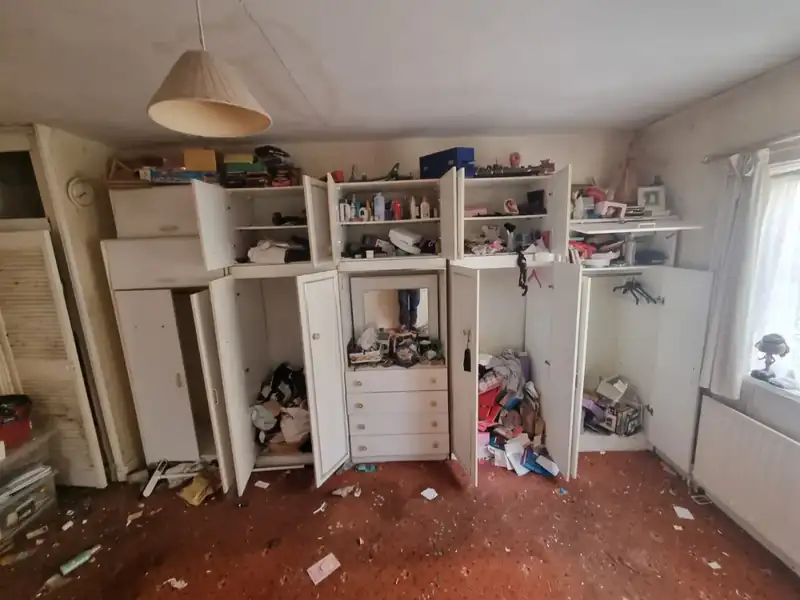
No driveway: where the truck goes
On a terraced street with cars on both sides there is usually no space outside the house on the morning, and a clearance truck cannot double-park for a day. So the truck position is settled before the day, not found on it.
- Photograph the street from the front door in both directions and send it with the room photographs. It shows us the width of the road, whether it is one-way, where the corners are and how far away a space might be.
- Talk to the neighbours the week before. Asking the people either side to leave the kerb outside free on the morning is the simplest arrangement there is, and most people are glad to help when they know why.
- Accept a longer carry if that is what the street allows. The truck may stand at the end of the terrace or round the corner on a wider road, and the contents are carried to it. The quote allows for the distance.
- The truck may move during the day. If a space opens up closer, we take it. The crew works in a chain so the house is never left open and unattended, and items are not stacked on the footpath.
We do not block a neighbour's door or gateway, and we do not stand the truck anywhere it is not allowed to be. If the street really cannot take a truck, we plan from the nearest road that can.
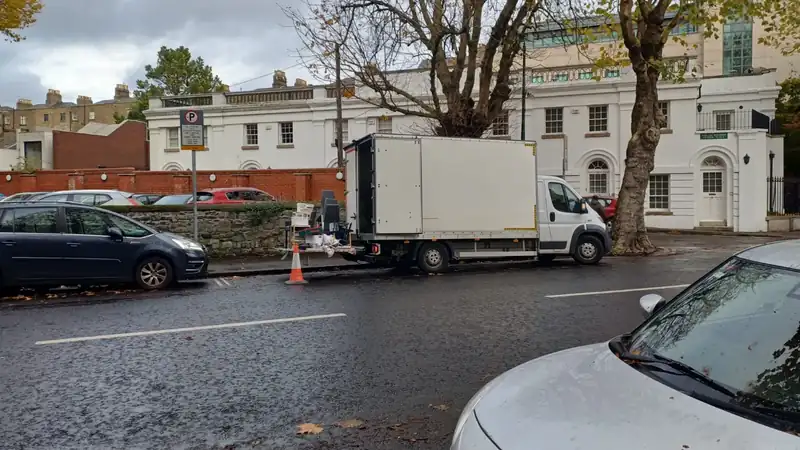
Back yards, sheds and lanes
The yard behind a small house is its storage: a shed or lean-to, a coal bunker that has not held coal for decades, bicycles, a washing machine that was replaced and never moved, paint tins, a mower for a garden that is mostly concrete. Photograph it with the rooms so it is in the quote.
If there is a lane behind the terrace and a gate onto it, the yard can empty that way, which spares the front room. Lanes are usually too narrow for the truck, so the contents are carried to the end of the lane. If there is no lane, the yard is cleared last, after the rooms are empty and the route through the house is clear. See shed clearance for what sheds usually hold.
Two cautions. Paint, solvents, oils, fuel, chemicals, batteries and gas cylinders cannot come with us and should go to a civic amenity site. And we do not take asbestos or anything we suspect of being asbestos, so if the yard holds old roofing or insulation sheets, send a photograph.
A lifetime in a small house
The volume of a clearance has nothing to do with the floor area. A two-up-two-down lived in by one family since the 1960s holds a lifetime, stored wherever a small house allows: under the stairs, under every bed, on top of every wardrobe, in the hot press, in the attic, in the shed, behind the sofa. Drawers are full. Suitcases are full. The front room may have been kept for good and the back room lived in, and the back room shows it.
This matters in three ways. It is why we quote from photographs of every room with the wardrobes open and the hatch lifted, rather than from the size of the house. It is why the day is mostly carrying rather than lifting: hundreds of armfuls down one flight of stairs and out one door. And it is why the crew slows down in the bedrooms and at the bureau. Papers, photographs and personal items are set aside and shown to you rather than removed, and in a dense house they are everywhere: in biscuit tins, inside books, in coat pockets. A short list of what must be found, and where it might be, is the most useful thing you can give us.
If the house is full of books, records or collections rather than furniture, our Sandymount guide covers how those are triaged and why they weigh so much. If it is being cleared after a death, our bereavement clearance guide covers the decisions and the estate side.
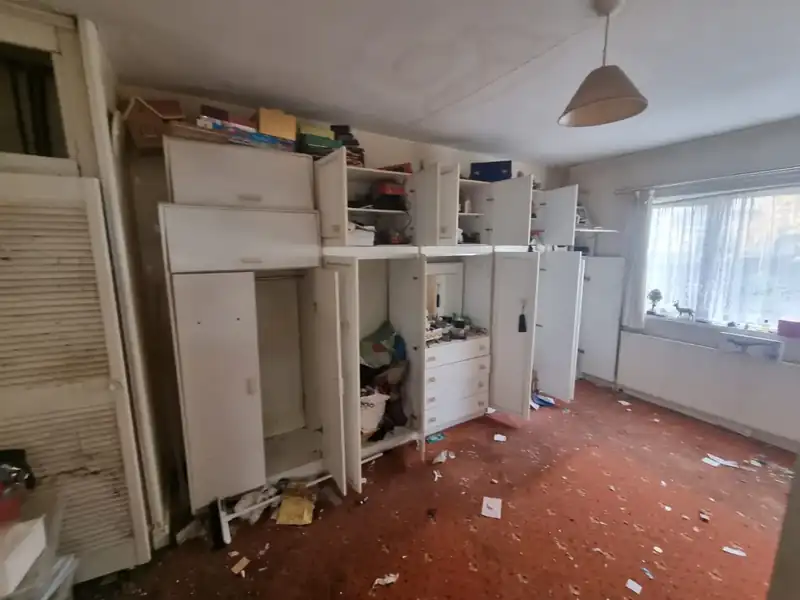
The one-day job, from the first key to the last photograph
Most two-up-two-downs and cottages are cleared in a day. This is how that day is ordered so that the single route through the house is never blocked:
- Arrival and the streetKeys collected, the truck positioned as agreed, a word with the neighbours either side. Floor protection goes down through the hall and up the stairs.
- The atticEmptied through the hatch first, while the landing is clear to stand on. Boxes and bags are handed down and carried straight out.
- The bedrooms, landing and stairsBeds and wardrobes dismantled where they stand, contents checked drawer by drawer, the panels and the armfuls carried down. The hot press and the cupboard under the stairs are cleared as the crew comes down.
- The front roomLeft until the upstairs is done so that it stays a clear path. Then the heavy pieces: the suite, the sideboard, the china cabinet.
- The kitchen and bathroomThe far end of the route. Appliances wheeled out, units unscrewed if they are going, cupboards emptied.
- The yard and the shedBy the lane if there is one; otherwise through the now-empty house.
- Sweep, photographs, keysEvery room swept and photographed, protection lifted, doors rehung if any were taken off, keys returned to whoever you have named.
Send photos of the street from the door, the hall and stairs, each room from the doorway with the wardrobes open, the attic hatch, the yard and the shed. We will give one fixed price and say honestly whether it is one day or two.
The photographs that get a small house quoted right first time
A small house is easy to under-photograph, because each room looks like a single picture. Send these and the fixed price will be right:
- The street from the front door, looking both ways, with the parked cars in shot
- The hall and the stairs from the bottom, showing the turn
- Each room from the doorway, then with wardrobe doors and cupboards open, including under the stairs and the hot press
- The attic hatch, and the attic itself if it is boarded and you can safely look in
- The kitchen, saying whether the units and appliances stay or go
- The yard, the shed and the lane gate if there is one
- Anything heavy or solid, photographed beside the door it has to pass, and anything staying for the sale, marked with tape
Ringsend, Irishtown, Sandymount and the Docklands
The same terraces and cottages run into Sandymount and across the river into East Wall and North Wall, and we clear homes in all of them, as well as in Ballsbridge and Merrion. The apartment blocks nearby are a different job; our Dublin 2 and Docklands guide covers lifts, loading bays and management companies. For pieces going to a relative, see furniture removal; for the rest of the city, start from the Dublin page.
What our customers say
Words from customers, copied as written from our Google Business Profile.
Would highly recommend Ciprian! Himself & his colleague did an excellent job on a house clearance recently. They were extremely thorough, professional & efficient. They arrived promptly & there was good communication with Ciprian who was easy to contact. A job well done.
A fantastic house clearing service, very fair price, and a very professional, careful, and friendly team. I cannot recommend Ciprian and his colleagues highly enough.
Clearing a small terraced house in Ringsend or Irishtown - common questions
Can a two-up-two-down in Ringsend or Irishtown really be cleared in one day?
There is no driveway and cars park on both sides. Where does the truck go?
The wardrobes are built into the alcoves. Can they be taken out?
Will the sofa fit out through the front door?
Can you take the kitchen units and the cooker as well?
The house has a lane at the back. Will you use it?
Is there anything in the shed or yard you cannot take?
The house is tiny but packed. Does the size make it cheaper?
Will you check drawers, boxes and tins for papers and photographs?
Do we have to empty the attic through the hatch ourselves?
Can one or two pieces go to a relative's house instead of being cleared?
Can the neighbours' cars stay where they are, or should we ask them to move?
Do you cover Sandymount, East Wall and the Docklands as well as Ringsend and Irishtown?
Are you insured, and are you an authorised waste carrier?
Send photos & get a quote
The fastest way to a fixed price: a few photos of each room or area, your Dublin 4 address or Eircode, and a rough idea of when you'd like it done. No obligation.
- Fixed written price — labour, transport and disposal included
- Dates agreed once we have seen the job; timeframes are not promised beforehand
- Fully insured crew, authorised waste carrier (Permit No. NWCPO-25-13287-01)
- Reuse and recycling first; valuables and sentimental items set aside for you
Prefer WhatsApp? Send photos to 083 090 4545.
Related guides
House clearance in Sandymount: books and collections
For Sandymount families clearing a home full of books, vinyl, papers, photographs, china and tools: triage without reading every page, realistic reuse, weight and volume, and the must-find list.
Read the guide →Bereavement clearance in Donnybrook
For families and executors clearing a tall period house in Dublin 4: parking, carrying routes, protecting original floors and stairs, multi-day sequencing and the agent's photography date.
Read the guide →House Clearance Dublin guide
What a Dublin house clearance includes, what drives the price, how to prepare, and what happens on the day.
Read the guide →Services covered in this guide
House Clearance
Full or part house clear-outs, left broom-clean.
Learn more →Furniture Removal
Sofas, beds, wardrobes and white goods collected and taken away.
Learn more →Bereavement Clearance
A discreet, unhurried service when clearing a loved one's home.
Learn more →Shed Clearance
Garden sheds and outbuildings cleared — old sheds dismantled too.
Learn more →Junk Removal
Rubbish, bulky waste and unwanted items collected — no skip needed.
Learn more →A small house in Ringsend or Irishtown to clear?
Send photos of the street from the front door, the hall and stairs, each room from the doorway, the yard and the shed. One fixed price, and we tell you honestly whether it is a one-day job.