
Bereavement Clearance in Donnybrook: Clearing a Period Home in Dublin 4
A practical guide to clearing a parent's or relative's period home in Donnybrook: where the truck stands on a permit-parking street, how furniture comes down three or four floors without marking the stairs, how the days are sequenced, and how the solicitor and the estate agent's photographer fit in.
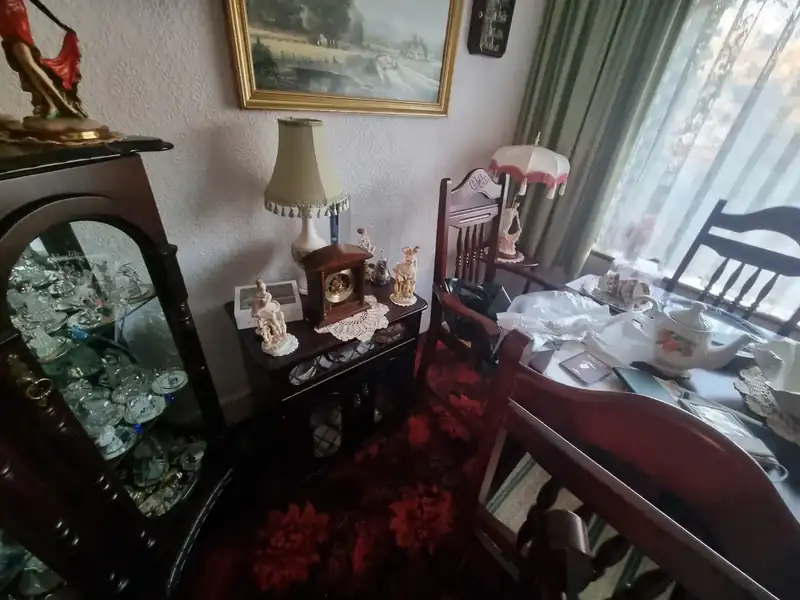
A period house is cleared floor by floor, not room by room
Most of what is written about bereavement clearances is about decisions: what to keep, who chooses, when to start. Our Dublin bereavement clearance guide covers that side in full. This guide is about something more physical. In Donnybrook and the rest of Dublin 4, the family home being cleared is often a tall period house: three or four floors, a basement or garden level, a return at the back, an attic up a narrow stair, and a street where the only parking is at the kerb. The building shapes the job.
So this is a guide to the practicalities: where a truck can stand on a permit-parking street, how a wardrobe comes down from the top floor without marking the banisters, why a house like this is sequenced over more than one day, and how the solicitor and the estate agent's photography date set the timetable at either end. It is general practical guidance, not legal advice; the solicitor or executor handling the estate is the right person for anything about the estate itself.
PropertyClearance.ie is based in Athy, Co. Kildare, and clears homes across Dublin 4; see our house clearance in Donnybrook and bereavement clearance pages. If you would rather talk first, call 083 090 4545.
What a Donnybrook period house tends to involve
The older houses of Dublin 4 share a family resemblance, and each feature has a consequence for a clearance.
- Steps up to the front door. Everything leaving by the hall door comes down outside steps first, so the pavement and railings are part of the route.
- A basement or garden level. A separate flat, the kitchen or decades of storage, reached from inside, from steps at the front or from the garden. Its route out is rarely the same as the floors above.
- The return. Half-landing rooms at the back with their own short flights of stairs: bathrooms, box rooms, studies and a lot of boxes.
- Tall reception rooms. The largest furniture in the house is usually here: sideboards, bookcases, dining tables, sometimes a piano.
- An attic with a narrow stair. The last flight is often the steepest, and the attic is often the fullest room.
- A long garden and a shed. Included when you photograph them. Where the house backs onto a usable lane, garden contents can leave that way; otherwise they come through the house last. See garden clearance and shed clearance.
- Original features. Floorboards, tiled halls, plasterwork, turned banisters and panelled doors are part of what the house will sell for, and the easiest things to scuff.
If the house was divided into flats at some point and later joined back together, expect extra kitchens, extra meters, locked internal doors and more than one household's contents. Tell us; it changes the plan more than the volume does.
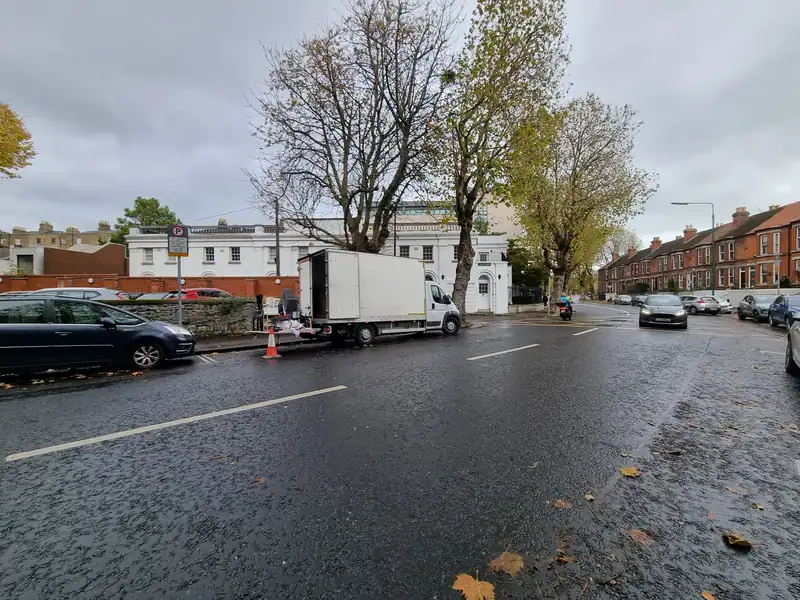
Parking and the truck position on a permit-parking street
Parking on most Donnybrook streets is on the street itself, often under permit or pay-and-display rules, and a clearance truck needs to stand at the kerb for several hours while it is loaded. Every extra metre between hall door and tailgate is walked dozens of times in a day, so the truck's position is the biggest practical question on the job.
- Send a photograph of the street from the front door, in both directions, with the room photographs. It shows us the kerb, the parked cars, the trees and the width of the road.
- Have a word with the neighbours the week before. If they normally use the space outside, asking them to leave it free on the morning is the simplest arrangement there is.
- Tell us about restrictions you know of: a bus route, a school, a one-way or very narrow street, a lane at the back that is or is not usable.
We plan the truck position around what the street allows and do not block a neighbour's gate or drive. If the only workable space is some distance away, the quote allows for the extra carrying.
Carrying routes: the steps, the hall, the stairs and the basement
In a tall house the route each item takes is decided before it is lifted. A wardrobe from a top-floor bedroom passes down three or four flights, round each landing, along the hall and down the front steps. A chest freezer in the basement may be better taken out through the garden-level door than through the house at all.
What comes apart and what does not. Beds, wardrobes and flat-pack units are dismantled where they stand, so what travels down the stairs is panels rather than boxes. Solid period furniture generally does not come apart: a mahogany sideboard, a glass-fronted bookcase or a dining table is carried whole, which is where the planning matters. Pianos are carried whole too; tell us about one in advance, with a photograph, so the right people and equipment are there.
Doors, turns and the return. Where a landing is too tight for a large piece, an internal door may be lifted off its hinges for the day and rehung afterwards. The return stairs are usually the narrowest, so those rooms come down in smaller loads. Nothing is pushed or slid down a staircase.
The basement. Basement and garden-level rooms are often damp, poorly lit and full of heavy, awkward items. Where there is a separate door to the front area or the garden, that becomes the basement's own route out, and it is usually cleared as a stage of its own; see basement clearance.
How original floors, stairs and plasterwork are protected
A period house should look exactly as it did when the last piece of furniture leaves. In practice that comes down to a short list:
- Floor protection laid along the hall and up the main stairs before the first item moves
- Banisters, newel posts and door frames padded on the tight turns
- Furniture carried, never dragged, over boards and tiles
- Heavy items carried by enough people, with one person guiding at the turns
- Internal doors removed and rehung rather than forced past
- A walk round with you at the end of each day to check walls, floors and stairs
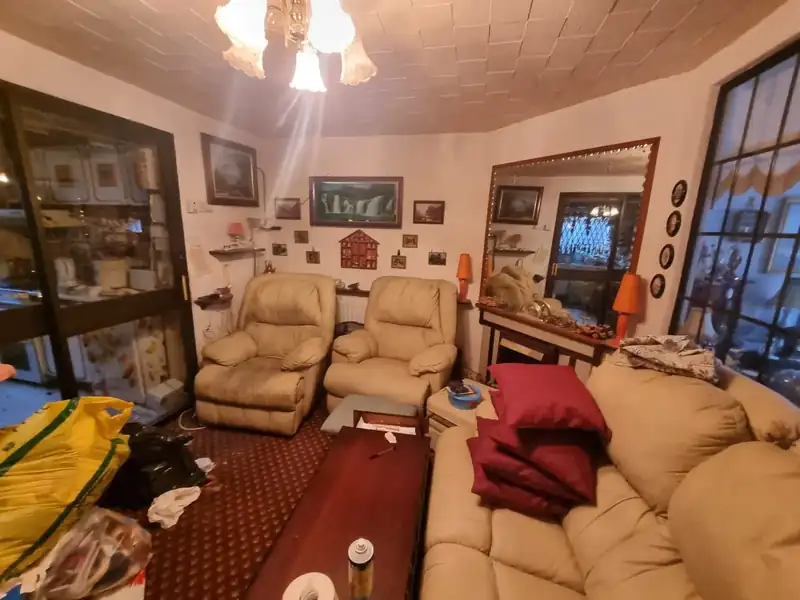
Sequencing a tall house over more than one day
A three- or four-storey house with a basement is rarely a one-day job, and trying to make it one is how things get damaged. A sensible order, agreed in writing beforehand:
- Before anyone lifts anythingPapers, photographs and anything the family wants are out of the house or in one marked room with the door closed. Anything a valuer or the solicitor needs to see stays where it is.
- Top of the house firstThe attic and top-floor bedrooms, cleared while the stairs are freshest and the hall is empty. Anything in drawers, pockets and boxes that looks personal is set aside.
- The middle floors and the returnBedrooms, bathrooms, box rooms and studies. Paperwork tends to live here, so the crew slows down.
- The reception roomsThe largest and heaviest furniture, carried whole along a hall that is now clear. Pieces staying for the agent's photographs are protected in place.
- The basement or garden levelOften a day of its own: kitchen contents, white goods and years of storage, taken out by its own route.
- The garden and the shedBy the lane if there is one and it is usable, otherwise through the house last.
- Between daysUpper floors empty, hall protection still down, kept items untouched, doors locked, alarm set. We agree who locks up, who opens in the morning and who to ring if anything is wrong. Keep the electricity on; the crew needs light on the stairs.
- Sweep, photographs, keysEvery room is swept and photographed, floor protection is lifted, doors are rehung, and keys go back to whoever you have named.
Working with the solicitor and the estate agent's photography date
A clearance like this is bracketed by two other professionals: the solicitor, who confirms at the start who may give instructions and whether anything must stay for valuation, and the estate agent, who sets the date at the end for the photographs that will sell the house.
The solicitor
Period houses in Dublin 4 often hold things of value: paintings, silver, rugs, antique furniture, books. If the estate needs a valuation, it happens before the clearance, and those items stay where they are until the valuer has been. Ask the solicitor whether a valuation is required, who holds the keys, and whether there is a date the house must be empty by. We provide a written quote beforehand and, on request, dated photographs of every room and written confirmation of clearance for the estate file.
The estate agent
Agents generally want their photographs taken once the house is clear and clean. Some prefer a few pieces left in the main rooms for scale; others want the rooms bare. Ask before you book and tell us exactly which pieces stay, so they can be protected while everything around them leaves; the same goes for carpets, curtains and light fittings. Work backwards from the agent's date: photographs, then a clean if one is needed, then the clearance, with a day or two spare between each. A clean is a separate job; ask when you request the quote and we will say what can be arranged.
Send photos of each floor, the basement, the attic and the street, and tell us the agent's date if there is one. We will say honestly how many days it needs and give one fixed price.
What changes the quote for a period house
One fixed written price from photographs, covering labour, transport and disposal. For a house of this kind these factors move it:
| Factor | Why it matters here | What to send or tell us |
|---|---|---|
| Number of floors | Every flight of stairs is walked with every item. | How many floors, including the attic and the return |
| Basement or garden level | Its own route out; often damp, heavy contents. | Photos, and how it is reached |
| Truck position | Carrying distance from hall door to tailgate. | A photo of the street in both directions |
| Solid furniture and pianos | Carried whole, by more people, sometimes with doors removed. | A list, approximate sizes, which floor |
| Items staying for photographs | Protected in place while the rest leaves. | Which pieces, which rooms |
| Garden, shed and lane | Extra volume and possibly a second route out. | Photos of both, and whether the lane is usable |
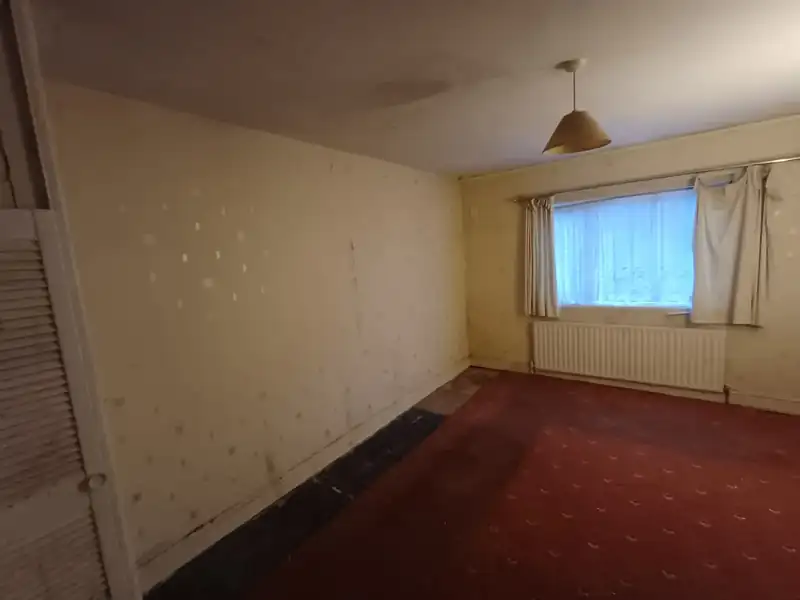
Donnybrook, Ballsbridge, Sandymount and the rest of Dublin 4
The same houses, and the same parking, run across the district, and we clear them in Ballsbridge, Sandymount, Ranelagh and Rathgar as well as Donnybrook. If the house is full of books and collections rather than furniture, our Sandymount guide to books, records and collections deals with that side. For pieces going to relatives, see furniture removal; for the whole city, start from the Dublin page. One note on sheds: paint, solvents, oils, chemicals, batteries and gas cylinders cannot come with us, and should go to a civic amenity site.
What our customers say
Words from customers, copied as written from our Google Business Profile.
We got Ciprian in to do a bereavement house clearance and I couldn't recommend him higher. They made what was really a difficult experience for us so much easier and Ciprian was a gentleman throughout and very understanding of what we were going through. Also it was very refreshing these days to see someone operating his business in a very transparent and honest way and the job they did was top class and left the house spotless afterwards.
Used Krystal Klean to clear a full house after probate in Dublin 8 recently. First class service and very professional. Arrived on time and worked hard and cleaned up after themselves. Rang to double check an issue when in doubt. Ciprian was very polite and the whole team very respectful. Would highly recommend them for any house clearance.
Bereavement clearance in Donnybrook - common questions
Can a three- or four-storey house in Donnybrook be cleared in one day?
Where does the truck park on a street with permit parking?
Will the original floors and staircase be protected?
Can the basement be cleared separately from the rest of the house?
The house has a piano and some very large wardrobes. Can they come out?
The estate agent wants photographs in two weeks. Can the house be ready?
Should some furniture stay for the estate agent's photographs?
Do we need to tell the neighbours?
The house was divided into flats years ago. Does that change the clearance?
Is there anything we should take out before the valuer or the crew arrive?
Can the solicitor or the estate agent hold the keys and let you in?
What happens to the garden and the shed?
Do you cover Ballsbridge, Sandymount and the rest of Dublin 4?
Who operates PropertyClearance.ie, and are you an authorised waste carrier?
Send photos & get a quote
The fastest way to a fixed price: a few photos of each room or area, your Donnybrook address or Eircode, and a rough idea of when you'd like it done. No obligation.
- Fixed written price — labour, transport and disposal included
- Dates agreed once we have seen the job; timeframes are not promised beforehand
- Fully insured crew, authorised waste carrier (Permit No. NWCPO-25-13287-01)
- Reuse and recycling first; valuables and sentimental items set aside for you
Prefer WhatsApp? Send photos to 083 090 4545.
Related guides
Bereavement house clearance guide
How to approach clearing a parent's or relative's home — probate, executors, sorting belongings and what to expect on the day.
Read the guide →House clearance in Straffan for large homes
For Straffan owners and executors: planning a clearance of a large home with many rooms, heavy furniture, outbuildings and long approaches.
Read the guide →House clearance in Sandymount: books and collections
For Sandymount families clearing a home full of books, vinyl, papers, photographs, china and tools: triage without reading every page, realistic reuse, weight and volume, and the must-find list.
Read the guide →Services covered in this guide
Bereavement Clearance
A discreet, unhurried service when clearing a loved one's home.
Learn more →House Clearance
Full or part house clear-outs, left broom-clean.
Learn more →Furniture Removal
Sofas, beds, wardrobes and white goods collected and taken away.
Learn more →Attic Clearance
Lofts and attics emptied — you decide what stays, we take the rest.
Learn more →Garden Clearance
Overgrown gardens, green waste and broken garden furniture removed.
Learn more →Clearing a family home in Donnybrook?
Send photos of each floor, the basement, the attic and the street outside, or call first and talk it through. There is no charge for a quote.