House Clearance in Sandymount: Books, Records and a Lifetime of Collections
Some houses are cleared in furniture; others are cleared in books. This guide is for families in Sandymount facing shelves by the thousand, boxes of records and papers, cabinets of china and a shed of tools: how to triage without reading every page, who realistically takes what, and how the weight and volume are handled on the day.
When the contents are a library, not a living room
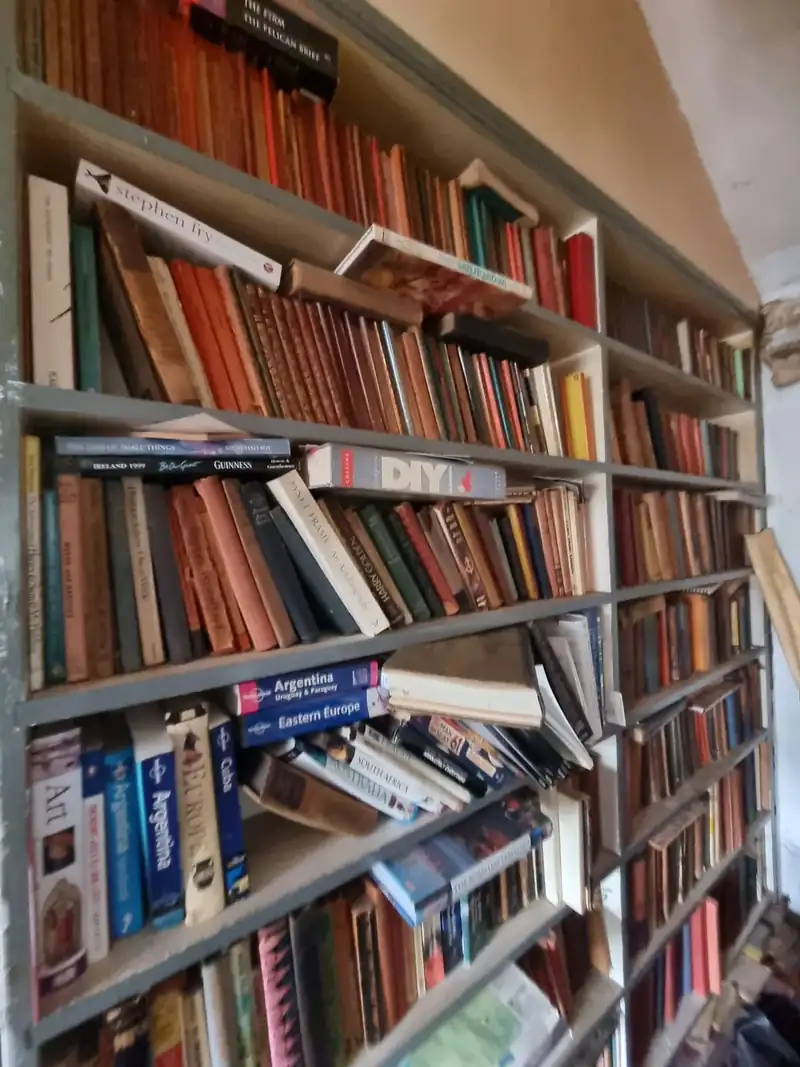
Most house clearance advice assumes the hard part is furniture. In a lot of Sandymount homes it is not. The sofa and the beds are an afternoon's work; the difficulty is the thousands of books on every wall, the boxes of records, the filing cabinet and the biscuit tins of letters, the cabinet of china that was a wedding present, the photographs in albums and envelopes, and a shed of tools that belonged to someone who could fix anything. Each of these categories is numerous, heavy, and personal in a way a wardrobe is not.
This guide is about those categories. How to triage them without reading every page. Who realistically takes what, and what charity shops and reuse can and cannot absorb. Why books change the quote and the day more than any other item in a house. Whether to box or leave loose. And how to keep a short list of the things that must be found, so that the crew is looking for them too.
PropertyClearance.ie is based in Athy, Co. Kildare, and clears homes across Dublin 4. The general service is on our house clearance in Sandymount and house clearance pages; if the house is being cleared after a death, our bereavement clearance guide covers the decisions and the estate side. Call 083 090 4545 if you would rather talk first.
Why collections take longer to decide about than furniture
A three-piece suite is one decision. A wall of books is a thousand, and every one of them invites the same three thoughts: someone might want this, this might be worth something, and I should just have a look inside. Families who set out to go through everything properly usually stop a few shelves in, not because they do not care but because the method is wrong. Reading is not sorting.
The second trap is the sense that the collection was the person. Books, records and tools are often the clearest picture of how someone spent their time, and clearing them can feel like clearing the person. It helps to say plainly that the collection and the memory are different things, and that keeping a shelf's worth, chosen with care, honours it better than keeping twenty boxes nobody will open again.
Triage without reading every page
A method that works for books and transfers to records, papers and china:
- Decide by shelf, not by titleStand back and look at a whole shelf or a whole box. Most shelves are obviously one thing: paperback fiction, old textbooks, a run of a magazine, reference books from decades ago. Decide about the shelf. Pull out only the few volumes that stand out.
- Ask three questions, in orderDoes anyone in the family want it, by name? Is it likely to be of real value, by a dealer's standards rather than ours? Is it in good enough condition for anyone else to use? If the answer to all three is no, it goes, unopened.
- Sample a box, do not empty itFor boxes of papers and records, lift the lid, look at the top layer and the labels, and decide about the box. Only a box that looks like documents, photographs or letters needs to be gone through.
- Use three places, not three pilesOne room or corner for keep, one for offer to family or a dealer, and everything else stays where it is for the crew. Mark the keep area with tape on the door.
- Photograph the shelves for relatives elsewhereA photograph of each shelf run lets a brother in London or a daughter in Australia point at what they want without a long weekend in Dublin. Give them a date to answer by.
- Time-box itTwo hours a visit, a few visits, then stop. The remainder is cleared as it stands.
Who realistically takes what
Honest expectations save a lot of carrying. In our experience the categories behave like this:
| Category | Realistic options | Before the day |
|---|---|---|
| General books in good condition | Charity shops and reuse take some; they cannot take thousands at once and will not usually accept damp, mouldy or damaged copies. We set aside reusable books where possible. | Pick the family's shelf. Ring a charity shop before you turn up with boxes. |
| Old reference sets, textbooks, encyclopaedias | Very rarely wanted by anyone. Recycled as paper when they cannot be reused. | Do not spend time on them unless one has sentimental value. |
| Books that might be valuable | First editions, signed copies, local history, antiquarian volumes. A dealer or auctioneer can look at them; we do not value items. | Set them aside and get an opinion before the clearance. |
| Vinyl, CDs and tapes | Records in good condition have a market and a dealer can assess a collection. CDs and tapes rarely do. | Keep records upright and dry. Ask a dealer first if the collection is large. |
| Papers, letters and documents | The family's to keep or dispose of. We set aside anything that looks important; we do not offer shredding. | Go through boxes that look like documents. Decide what the family keeps. |
| Photographs and albums | Always kept for the family. Anything found loose during the clearance is set aside and shown to you. | Gather what you can find into one box. |
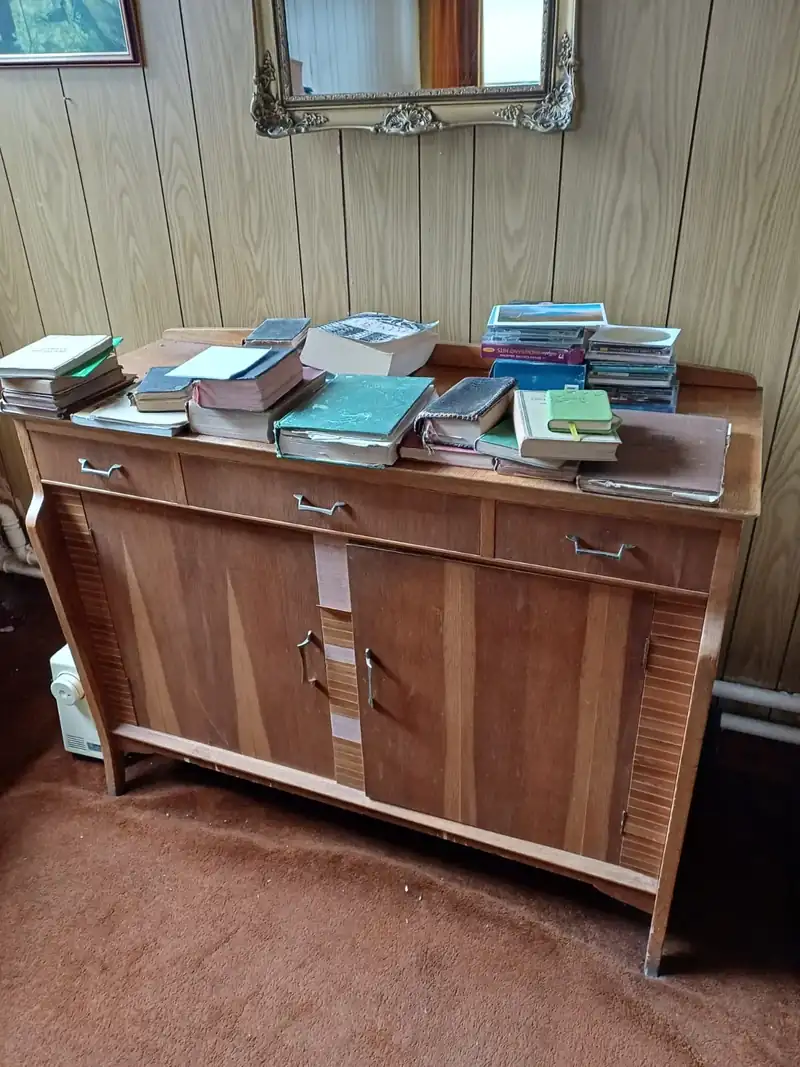
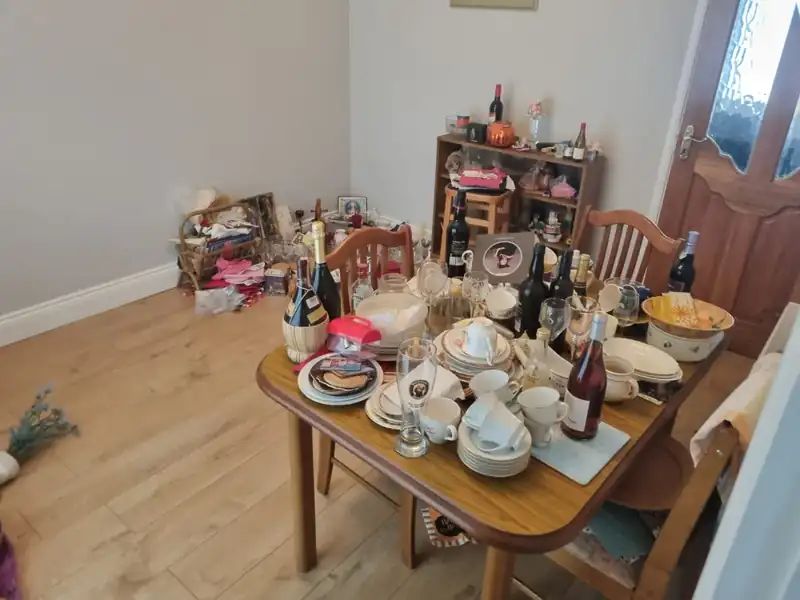
| China, glass and silver | Good sets are sometimes wanted by family or can be looked at by a valuer; ordinary sets are hard to pass on. Reusable pieces are set aside where possible. | Photograph cabinets for relatives. Ask a valuer about anything that may have value. |
| Tools and workshop contents | Hand tools in working order are often reusable. Power tools are handled as electrical equipment. Paint, solvents, oils and gas cylinders cannot come with us. | Pick what the family wants. Take hazardous items to a civic amenity site. |
Weight and volume: why books change the quote
Books are, by weight, usually the heaviest single category in a house. A run of shelving that looks modest in a photograph is dense, awkward to carry in quantity, and has to come down stairs and out to the truck a few armfuls at a time. The same is true of records, which are heavier again for their size, and of paper in boxes. That weight affects the quote, the number of trips, and how the truck is loaded, which is why we ask for a photograph of every shelf run and every stack of boxes rather than one picture of the room.
Two practical consequences. First, do not try to move the books yourselves before the day. Carrying boxes of books down a staircase is how backs are hurt, and there is no need; carrying is the part we do. Second, tell us where the heaviest concentrations are: a boarded attic full of boxes, a basement study, a garage lined with shelving. Those decide the sequence and the people.
Photograph each shelf run from a step back so that the height and depth are visible, and photograph boxes with their lids off where you can. Send them with the room photographs and you will get one fixed written price covering labour, transport and disposal.
Boxing versus loose loading
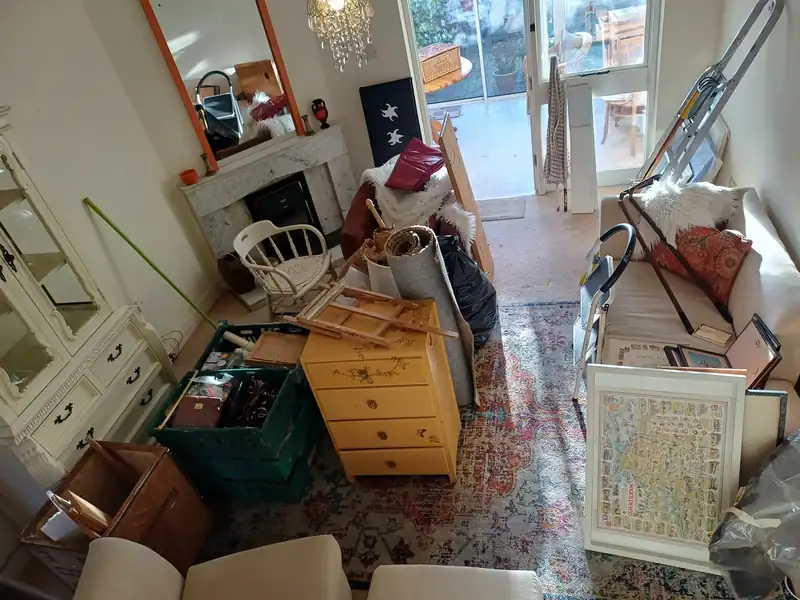
There is no need to box anything that is going. Books are taken from the shelves and loaded by the crew, and the time you would spend boxing them is better spent choosing what stays. Boxing is only worth your while for the things you are keeping, so they travel safely and are never confused with what is leaving.
- Use small boxes for books and do not fill them to the top; a box of hardbacks that one person can lift is a half-full one.
- Keep records upright, never flat in a stack, and away from damp.
- Put papers in lidded boxes and label the outside with what is inside and whose they are.
- Put everything being kept in one room, close the door, and tape a note to it. Anything outside that room is treated as going.
- Mark individual pieces staying in place, such as a bookcase or a cabinet, with tape and a note on the front.
If pieces are going to relatives in Dublin or nearby, tell us; our furniture removal page covers how that works.
The must-find shortlist: things that hide inside collections
Collections hide things. Before the crew arrives, write down what must be found and where it might be, and give us the list. These are the usual suspects:
- Letters, cards, photographs and pressed flowers used as bookmarks
- Inscribed copies: a book given by a parent, a school prize, a signed volume
- Deeds, policies, certificates and the will, filed among ordinary papers
- Negatives and loose photographs in shoeboxes and biscuit tins
- Address books, diaries and recipe books in a parent's handwriting
- Medals and keepsakes kept in a drawer of the bureau or the china cabinet
- Keys for the shed, a safe or a storage unit, hung on a hook or kept in a jug
- The one record, book or tool a family member has asked for by name
Send a photo of each shelf run and each stack of boxes, with the rooms they are in. We will give one fixed price, and the list of what must be found comes with us on the day.
The day itself in a Sandymount house
Sandymount is a seaside village of terraces and family houses, many lived in by the same family for decades, and many with parking on the street rather than a driveway. The truck stands as close as the street allows and the books come out through the front door, which is why we ask for a photograph of the street as well as the rooms. Tell us about stairs to an attic study or a converted roof space; a boarded attic full of boxes is often the heaviest part of the whole job.
On the day the crew works room by room. Shelves are emptied into the truck, and as they go the crew checks inside books, between records and in the bottoms of boxes for the things on your list and anything else that looks personal: papers, photographs, letters. All of it is set aside and shown to you rather than loaded. Kept items in their marked room are not touched. Good-condition books and household goods are sorted for reuse where possible, the rest for recycling and disposal, and every room is swept and photographed before the keys go back.
Sandymount, Irishtown, Ringsend, Ballsbridge and Donnybrook
The same kinds of houses, and the same kinds of collections, are found across the coast and the rest of Dublin 4. We clear homes in Irishtown, Ringsend, Merrion, Ballsbridge and Donnybrook as well as Sandymount. For the practicalities of a tall period house, our Donnybrook guide covers parking, stairs and sequencing; for attics and sheds full of boxes and tools, see attic clearance and shed clearance. Start from the Dublin page for the whole city.
What our customers say
Words from customers, copied as written from our Google Business Profile.
Just cleared out my family home, very professional, and even left out any photos they had found which was so kind of them. Cleared house, attic and three sheds, arrived on time, and very compassionate as it's upsetting clearing your house you grew up in. Would highly recommend this clearance company & also great value, thanks lads 👍
Just had a full house clearance done this morning and I cannot recommend them enough. Punctual, extremely helpful and everything done to a very high standard. Thanks very much - a tough job and you handled it so professionally
Books, records and collections in a Sandymount house clearance - common questions
Do we have to sort the books before you come?
Will you check inside the books for letters or photographs?
Can you take thousands of books in one visit?
Do charity shops take old books?
What happens to books that cannot be reused?
Are old records worth anything?
Should I box the books I am keeping?
Can you clear the papers, or should we shred them first?
Will photographs and albums be kept safe?
The china and glass were my mother's. What are the options?
Can tools from the shed go to someone who will use them?
Are books heavier than furniture, and does that change the price?
Some of the family live abroad and want to choose books. How can that work?
Do you cover Irishtown, Ringsend, Ballsbridge and Donnybrook as well as Sandymount?
Is PropertyClearance.ie an authorised waste carrier, and is the crew insured?
Send photos & get a quote
The fastest way to a fixed price: a few photos of each room or area, your Sandymount address or Eircode, and a rough idea of when you'd like it done. No obligation.
- Fixed written price — labour, transport and disposal included
- Dates agreed once we have seen the job; timeframes are not promised beforehand
- Fully insured crew, authorised waste carrier (Permit No. NWCPO-25-13287-01)
- Reuse and recycling first; valuables and sentimental items set aside for you
Prefer WhatsApp? Send photos to 083 090 4545.
Related guides
House Clearance Dublin guide
What a Dublin house clearance includes, what drives the price, how to prepare, and what happens on the day.
Read the guide →Bereavement clearance in Donnybrook
For families and executors clearing a tall period house in Dublin 4: parking, carrying routes, protecting original floors and stairs, multi-day sequencing and the agent's photography date.
Read the guide →Bereavement house clearance guide
How to approach clearing a parent's or relative's home — probate, executors, sorting belongings and what to expect on the day.
Read the guide →Services covered in this guide
House Clearance
Full or part house clear-outs, left broom-clean.
Learn more →Bereavement Clearance
A discreet, unhurried service when clearing a loved one's home.
Learn more →Furniture Removal
Sofas, beds, wardrobes and white goods collected and taken away.
Learn more →Attic Clearance
Lofts and attics emptied — you decide what stays, we take the rest.
Learn more →Shed Clearance
Garden sheds and outbuildings cleared — old sheds dismantled too.
Learn more →A house full of books and collections in Sandymount?
Send photos of the shelves, the boxes and the rooms they are in. We will give one fixed price, and anything you want found is set aside.