
Property Clear Out in Dublin 2: Georgian Houses From Basement to Attic
For owners, executors, landlords and managing agents with a whole building in Dublin 2 to empty. A Georgian house is cleared floor by floor, from a damp basement to rooms under the roof, with a flat on one level and an office on the next. This guide covers the order of work, the stairs, the street outside and what each floor usually holds.
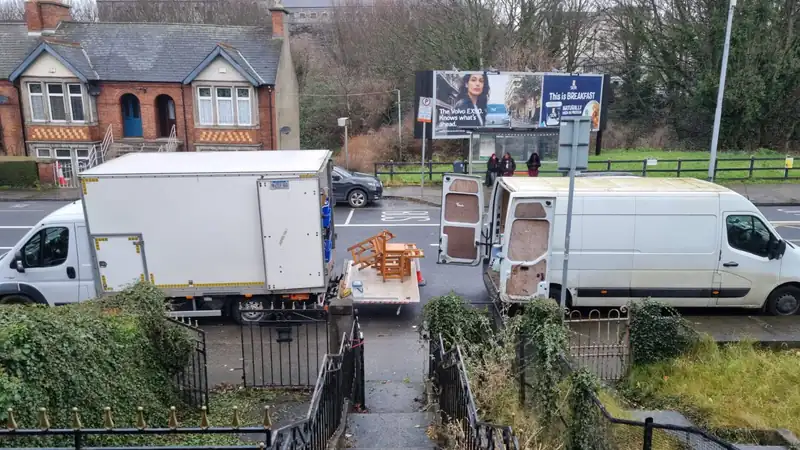
A house that has been several things at once
The Georgian and Victorian terraces of Dublin 2 were built as family houses and have been almost everything since. A typical building today might have storage in the basement, a flat on the hall floor, offices on the two floors above and rooms under the roof that nobody has opened in years. When it is sold, inherited, re-let or refurbished, all of it has to be emptied.
That is what we mean by a property clear out: not one flat or one office, but the whole building, from the basement to the attic, under one instruction and one price. It is a different job from clearing a single apartment in a managed block, which our Dublin 2 and Docklands apartment guide covers, and the general service is described on the property clearance page.
PropertyClearance.ie is based in Athy, Co. Kildare, and works across Dublin six days a week. Call 083 090 4545 or send photos for a price. Nothing here is legal advice; anything to do with tenants' belongings, leases or an estate is for the owner's solicitor.
Floor by floor: what each level usually holds
Every building is different, but the same things turn up on the same floors often enough to plan around:
| Level | What is usually there | What to tell us |
|---|---|---|
| Basement | Old furniture, archive boxes, shelving, building materials, sometimes a former kitchen or flat | Whether it is damp, how it is reached, and whether there are cellars under the footpath |
| Hall floor | A flat or reception rooms: furniture, beds, appliances, carpets | Which fittings belong to the building and are staying |
| First and second floors | Offices: desks, chairs, cabinets, computers, paper files | Whether files are confidential and whether any tenant still has belongings there |
| Top floor and attic | Small rooms full of stored items, old fittings and boxes | The width of the top stairs and whether there is a hatch into the roof space |
| Return and rear | Kitchenettes, bathrooms, a yard, a rear building or garage | Whether there is a lane or gate at the back that a truck can use |
The basement
The basement is where the job is won or lost. It is usually the fullest level, the hardest to get out of and the one with the most surprises.
- Access. Most basements are reached by steps down from the street behind railings, by an inside stair from the hall, or both. Tell us which, and send a photo of each.
- Damp. Furniture, carpets and boxes that have sat in a damp basement are rarely fit for reuse, and wet paper is heavy. Say if there has been water in it.
- Cellars under the footpath. Many of these houses have coal cellars opening off the basement area. Open them before you take photos; they are often full.
- What we cannot take. Paint, solvents, oils, fuel, chemicals, batteries and gas cylinders are common in basements and are not things we collect. If old pipework or a boiler is wrapped in lagging that could contain asbestos, leave it alone and tell the building's surveyor. We do not disturb it.
Basement work is described in more detail on our basement clearance page.
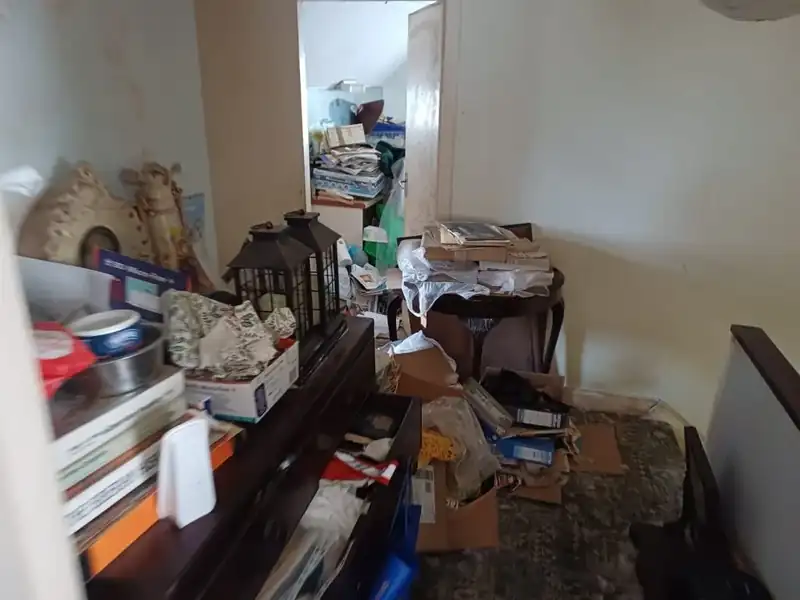
The stairs, and the order of work
A Georgian staircase is wide and shallow on the main floors and narrows sharply above them. That shapes the order we work in.
We start at the top. The small rooms under the roof are emptied first, while the stairs below are clear, and each floor is finished before the one beneath it is started. Large furniture is taken apart where the top flights need it. The basement is done last or alongside, through its own door, so the two streams of work do not cross on the stairs.
Many of these buildings are protected structures, and even where they are not, the stairs, handrails, doors and plasterwork are the most valuable thing in them. Floors and stairs are covered where needed, and items are carried, not dragged. If there are original features you are concerned about, point them out before we start.
How a whole-building clear out is arranged
From first contact to keys back, in the order it usually happens:
- Photos of every floor. Each room from the doorway, the basement, the stairs at their narrowest and the street outside the front door.
- A list of what stays. Fitted items, anything belonging to a tenant, and anything an agent or solicitor has said must be kept.
- One fixed price. In writing, for the whole property. For a large or complicated building we arrange a visit before pricing.
- A plan for the street. Where the truck can stop, at what times, and whether the rear of the building can be used.
- Top floor down, basement last. Each level emptied, checked and swept before the next is started.
- Photographs and keys. Every floor photographed empty, and the keys returned to you or your agent.
Loading on a city-centre street
We will not guess at the loading and parking arrangements outside your building, because they change from one street to the next and from one time of day to another. What we ask for is simple:
- A photo of the street outside the door, showing the kerb and any signs on the nearest poles
- A photo of the rear, if there is a lane, a gate or a yard
- Any times when the building, the street or the neighbours would prefer not to have a truck at the door
Where the truck cannot wait outside, everything is brought down to the hall first and loaded in short, full runs. We start at 8am, and for a building with offices next door an early start usually suits everyone.
Send photos of each floor, the basement and the street outside. We will give one fixed price for the whole property and tell you how we would plan the loading.
What is checked before anything leaves
A building that has had several uses holds several people's things. Before anything is removed, we need to know whose it is.
- Tenants' belongings. If a flat or an office was let, anything a tenant left behind is not automatically the owner's to dispose of. Photograph it, list it and take advice from your solicitor. We can clear everything else and leave those items in one room.
- Paper files. Offices leave archive boxes. If the files are confidential, arrange secure shredding before the clear out or tell us to leave them. Tell us which boxes are files so they are dealt with as you instruct.
- Computers and phones. We take them for recycling but do not wipe them. Have drives removed or wiped first if that matters.
- Personal papers and photographs. In a house that was also someone's home, these are set aside as they are found and handed to you.
- Fittings. Fireplaces, shutters, doors, light fittings and anything fixed stay unless the owner tells us in writing that they are to go.
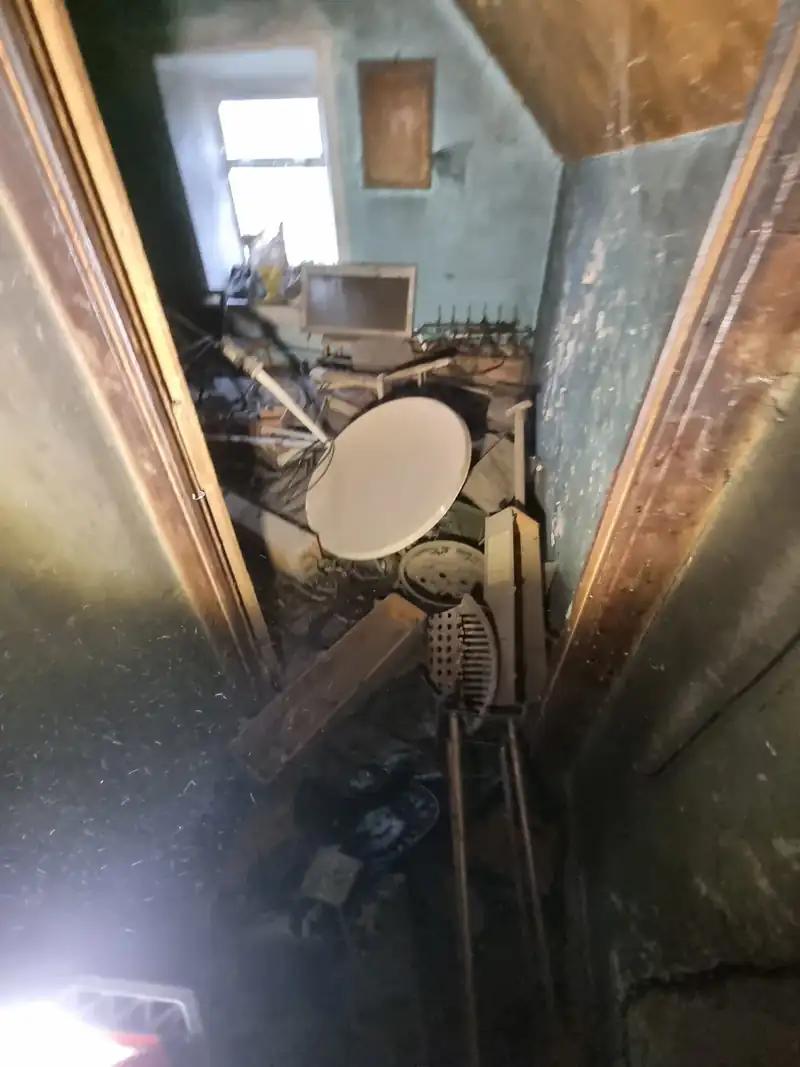
What the building needs next
Why the building is being emptied changes what 'finished' means, so tell us which applies.
For a sale, the agent needs every room visible for photographs and viewings, including the basement and the top floor. For a letting, the floors being let need to be empty and the common stairs clear. For a refurbishment, the contractor needs the whole building empty before starting, and it helps to know their start date. In each case the rooms are left empty and swept. We do not offer a deep clean or any building work.
What PropertyClearance.ie does in a building like this
A whole-building clear out brings most of our services together under one instruction:
- Property clearance: the whole building for an owner, executor, landlord or managing agent.
- Basement clearance: stored furniture, boxes and shelving from the lowest level and the cellars.
- Apartment clearance and end of tenancy clearance: flats on the hall floor or above.
- Office clearance: desks, chairs, cabinets and equipment from the working floors.
- Attic clearance: the rooms and roof space at the top of the house.
- Furniture removal: individual large pieces, where most of the building is already empty.
Reusable furniture goes to reuse where possible, metals and electrical items are recycled, and the rest goes to authorised waste facilities. PropertyClearance.ie is operated by Krystal Klean Express Limited, an authorised waste carrier under Waste Collection Permit No. NWCPO-25-13287-01, and is fully insured. We work Monday to Saturday, 8am to 5pm.
What to send us for a price
The more of this you can send, the firmer the price:
- A photo from the doorway of every room on every floor
- The basement, including any cellars and the steps down
- The main stairs and the narrowest flight at the top
- The street outside the front door and any rear lane or yard
- A note of what is staying and what belongs to a tenant
- Whether paper files need to be kept or shredded
- The date the agent, the new tenant or the contractor needs the building by
Dublin 2 and the neighbouring districts
We clear period buildings across Dublin 2 and the districts beside it, including Portobello, Ranelagh, Ballsbridge and Ringsend. For a family home rather than a mixed-use building, see our guide to clearing a period home in Donnybrook.
What our customers say
Words from customers, copied as written from our Google Business Profile.
Used Krystal Klean to clear a full house after probate in Dublin 8 recently. First class service and very professional. Arrived on time and worked hard and cleaned up after themselves. Rang to double check an issue when in doubt. Ciprian was very polite and the whole team very respectful. Would highly recommend them for any house clearance.
A fantastic house clearing service, very fair price, and a very professional, careful, and friendly team. I cannot recommend Ciprian and his colleagues highly enough.
Property clear out in Dublin 2 - common questions
What is the difference between a property clear out and a house clearance?
Can you clear a basement that is reached only by outside steps?
The basement is damp. Does that change anything?
Where will the truck park?
Part of the building was let as offices. Can you clear those floors too?
What happens to old paper files?
Will you remove fireplaces, shutters or other original fittings?
How do you protect the stairs and floors?
Can the building be cleared while one floor is still occupied?
How long does a whole building take?
Do I need to be there?
Are you an authorised waste carrier, and can the managing agent have your details?
Send photos & get a quote
The fastest way to a fixed price: a few photos of each room or area, your Dublin 2 address or Eircode, and a rough idea of when you'd like it done. No obligation.
- Fixed written price — labour, transport and disposal included
- Dates agreed once we have seen the job; timeframes are not promised beforehand
- Fully insured crew, authorised waste carrier (Permit No. NWCPO-25-13287-01)
- Reuse and recycling first; valuables and sentimental items set aside for you
Prefer WhatsApp? Send photos to 083 090 4545.
Related guides
Property clearance guide
End-of-tenancy, vacant, probate and pre-sale clearances explained for landlords, agents, sellers and executors.
Read the guide →Apartment clearance in Dublin 2 and the Docklands
For landlords and agents with units in managed blocks in Dublin 2 and the Docklands: concierge, lifts and loading bays, keys and fobs, abandoned belongings and re-letting.
Read the guide →Bereavement clearance in Donnybrook
For families and executors clearing a tall period house in Dublin 4: parking, carrying routes, protecting original floors and stairs, multi-day sequencing and the agent's photography date.
Read the guide →Services covered in this guide
Property Clearance
Any property, any size — houses, flats, offices, sheds and sites cleared.
Learn more →Basement Clearance
Basements, cellars and garden-level flats cleared, however awkward the access.
Learn more →Apartment Clearance
Flats and apartments cleared — lifts, stairs and tight access handled.
Learn more →Office Clearance
Desks, chairs, IT and paperwork cleared with minimal downtime.
Learn more →Attic Clearance
Lofts and attics emptied — you decide what stays, we take the rest.
Learn more →A whole building in Dublin 2 to empty?
Send photos of each floor, the basement, the stairs and the street outside the door. One fixed price in writing for the whole property, and every floor left empty and swept.